

![100+ Grocery Store Pictures [HD] | Download Free Images on Unsplash](https://images.unsplash.com/photo-1604719312566-8912e9227c6a?ixlib=rb-4.1.0&ixid=M3wxMjA3fDB8MHxzZWFyY2h8Mnx8Z3JvY2VyeSUyMHN0b3JlfGVufDB8fDB8fHww&fm=jpg&q=60&w=3000 "100+ Grocery Store Pictures [HD] | Download Free Images on Unsplash")
Few consumer experiences are as global as the grocery aisle promise of low prices and constant availability. Whether in Poland (Codziennie niskie ceny), Japan (毎日がお買い得) or Brazil (Preço Baixo Todo Dia), retailers around the world make the same pledge to their customers, everyday low prices. Yet despite this shared mission, the performance of listed grocery and staples retailers varies widely, showing that strategy and real-world outcomes are often worlds apart.
That’s why we see long-term compounders like Walmart and Costco in North America or PT Sumber (Alfamart) and Kobe Bussan (Gyomu Super) in Asia with years of outperformance. In contrast, others like Marks & Spencer and Sainsbury’s in the UK or Spar Group and Pick n Pay in South Africa have lost shareholder value for decades despite being among the leaders in their respective domestic markets.

It’s also why BIM, a grocery retailer operating in one of the harshest economic conditions, Turkey, still delivered an annualised shareholder return of 16% in USD terms since going public in 2005, but Carrefour, a French retailer, predominately focused in better economic markets, declined 1.6% annually during the same 20 years.
Despite being a relatively homogeneous business model; buy food and non-food products at wholesale, then sell to as many consumers as possible, the range of financial outcomes is broad, and to truly understand which, and why certain staples retailers have performed well, it’s important to look at the industry holistically. In this deep dive, I’ll discuss the following:
Table of Contents
History of staples retail: A global perspective on staples retailing, the transition to organised formats and drivers of staple retail success, broader technological and innovation impact on staples retailing and the bearish and bullish cases for the industry.
Staples retail formats: A review of the different retail formats, assessing the 18 product categories, and a review of the broader value chain.
The global staples retail listed market: An analysis of the global staples retail listed market, assessing economics, growth drivers, valuations and the overall opportunity the industry offers. Further assessments of profitability leaders (Sheng Siong), growth leaders (Avenue Supermarkets and Dino Polska) and undervalued companies (the Mexican retailers).
A quality analysis: A quality and moat analysis of 10 shortlisted grocery retailers (5 developed markets and 5 emerging markets), exploring their barriers to entry, balance sheets, pricing power, profit margin, among others.
The listed case study review: Case studies from different companies on key themes such as e-commerce in staples retail (Walmart and Coles Group), membership warehouse model (Walmart, Costco and PriceSmart) and retail in a challenging economic environment (BIM - Turkey),
The bear case for staple retail
I can imagine some readers initial thoughts after seeing the title of this deep dive, “staple retail? No way!”
There are many reasons one would immediately pass on investing in a staples retailer.
Low margins: A well-run staples retailer earns an operating margin (EBIT) of 4.5 - 6%. For context, the average listed company earns around 9% EBIT margins, while other business models, like financial exchanges, often earn ten times those margins seen in grocery retail.
Limited pricing power: Products sold at many retailers, such as fresh food, packaged foods, fuel, and household products, have limited pricing power. In fact, retailers’ year-on-year goal is to reduce the prices of these items and pass the savings to customers.
Capex Intensity: It’s incredibly Capex-intensive. Over the past 45 years, since 1980, Walmart, the world’s largest staples retailer, has spent more on Capex ($357 billion) than on total net income ($351 billion), underscoring the scale of physical investment in stores, warehouses, and distribution facilities.
Competition: The level of competition among staples retailers can be intense, especially in smaller store formats and against aggressive discounters. There’s also the Aldi and Lidl effect around the world, the rise of Amazon Fresh and grocery services in key developed markets and more recently, meal kit companies proving to be a viable alternative to grocery shopping.
Limited scope for internationalisation or exports: The staples retail industry is the retail sub-segment with the least room for exports or internationalisation. First, fresh food, which accounts for about half of sales for most retailers, is perishable and often consumed within a few weeks. The high inventory turnover limits any potential for exports.
Internationalisation is also an area in which staples retail struggles due to cultural limitations. Retail in the U.S. is very different from retail in the UK, and companies like Walmart, which have gained some scale in international markets (4.46% EBIT margin in international operations), often earn a lower EBIT margin than in their domestic market (5.14% EBIT margin in its U.S. operations).
So how could there be an investment case for staples retailing?
The very same drawbacks - low margins, limited pricing power, Capex intensity, and competition, are interestingly, the reasons I see an investment case for staples retail. Let me explain.
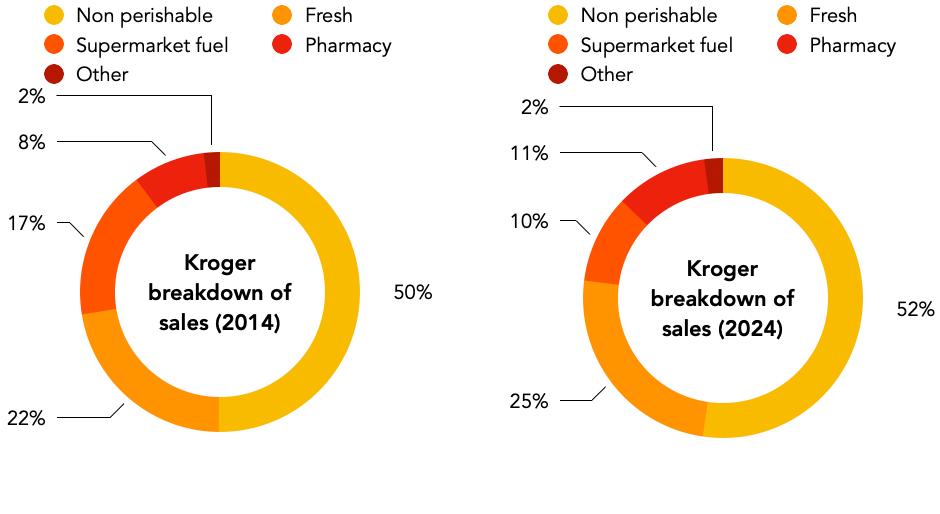
Low margins and Capex Intensity: While these are certainly challenges, both factors actually help keep barriers to entry high in many staple retail industries. Compared to other retail sub-segments such as apparel, home furnishings, and electronics retail, staples retailing is the most oligopolistic, with the big and established players often remaining dominant for many years. In the U.S., if we estimate that the average American spends $110 per week on staples retailing, then the big three; Walmart, Kroger, and Costco ($888.7 billion in U.S. revenue), hold 46% of the entire staples retail market.
In emerging markets, the market structure is often even more concentrated. For example, it’s estimated that in Indonesia, the big two Indomaret and Alfamaret have 65-75% of the domestic organised grocery retail market.
Limited pricing power: It’s certainly better to be invested in businesses with pricing power than those without. However, an equally important point is that staples retailing has limited pricing power because they are necessity products with everyday demand. Staples retailing serves customers daily to monthly, depending on the format. In the UK, research by Kantar showed the average household visits a grocery store 17 times a month, roughly once every 2 days. Very few industries offer such consistent sales, especially during economic challenges.
Competition: The bull case in my last industry deep dive, airports, was the limited competition, often leading to high margins. In most investment situations, it’s better to invest in companies with limited competition than in those, like retail, with excessive competition.
However, there’s a hidden benefit of competition, particularly in grocery retail. It keeps companies that genuinely want to stay winners innovative, forward-thinking and relentless. Reading the biographies of staples retail entrepreneurs such as Walmart’s Sam Walton and Shoprite’s Whitey Basson, it’s clear that competition was the backbone for successful retail:
“Whitey was constantly on the lookout for ways to innovate and keep the business fresh. In the early 1980s he and other Shoprite people started taking trips to America….I was worried that I would miss out on some or other trend other were able to spot…I took trouble to study successful trends and ideas from across the world and would apply them in Shoprite.” Whitey - The Rise and Rule of the Shoprite King
“Back in the early 1980s, for example, I travelled all over the world looking at global competition in retailing. I went to Germany, France, Italy, South Africa, Great Britain, Australia, and South America, and saw several concepts which interested me. I was impressed with the giant Carrefour stores in Brazil, which got me started on a campaign to bring a concept called Hypermart—giant stores with groceries and general merchandise under one roof….Eventually, we opened two Hypermarts in Dallas.” Paul Carter, then CFO of Walmart, Sam Walton- Made in America.

“Competition is very definitely what made Walmart—from the very beginning. There’s not an individual in these whole United States who has been in more retail stores—all types of retail stores too, not just discount stores—than Sam Walton. Bud Walton, Sam Walton- Made in America.
Competition in the staples retail industry has driven many successful companies to become one of the most innovative businesses globally. The e-commerce industry’s biggest struggle within retail is the grocery space, highlighting the challenge.
Limited scope for internationalisation or exports: Finally, my most significant reason for my global interest in staples retailing is the limited scope for internationalisation and exports. A Temu-like platform for fresh food and groceries would be very difficult, and as a result, there’s an opportunity for many domestic champions around the world. Today, there are 199 (I counted yesterday!) grocery retailers with a market cap above $50 million, and the sheer outperformance of some of these companies over the past 20 years is one of the most under-discussed facts. Costco often gets all the limelight with its 16% annualised return over the past 20 years, but here are some other great examples:
PriceSmart (The Caribbean): Costco’s predecessor, Price Club’s founder, Sol Price, founded the warehouse chain, which currently has 54 stores, and has similarly delivered an annualised 16% return over the past 2 decades.
BIM (Turkey): Despite hyperinflation and currency devaluation, BIM has grown from 1,075 in 2004 to 12,089 stores in 2024, delivering shareholders an annualised 16% return in USD terms over the period.
Dino Polska (Poland): Since going public in 2017, Dino, the Polish discount retailer, has appreciated tenfold in share price, with both revenue and operating profits compounding at over 20% annually.
PT Sumber (Indonesia): Since going public in 2009, the Indonesian second-market leader has returned 40x in USD terms (61x in local currency) and now has over 22,000 mini stores across the country, with net profits compounding at 21% annually over the 15 years.
Kobe Bussan (Japan): The fast-growing Japanese discount retailer has returned 37x in Japanese yen terms (or 22x in USD) since going public in 2006, an annualised return of 21% over nearly two decades.
These five, alongside many other examples such as Shoprite (South Africa), Alimentation Couche-Tard (Canada), and even other U.S. domestic companies like Casey’s General, have proven that there’s potential for many long-term winners despite the challenges and drawbacks the industry faces.
In the Jenga IP Industry research, only two of 60 industries (consumer staples: beverages & tobacco and industrials: aerospace and defence) have produced more long-term outperformers per company than the consumer staples retailing industry.
I will discuss these factors in more detail, but first, let’s dive into a historical perspective on staples and grocery retail to appreciate how we arrived at the current market format.
A history of staples and grocery retailing
Pre 20th Century
Grocery stores originated from European Trading Posts, which served as places where goods were traded between the 16th and 19th centuries. The emergence of canned food (mid-1800s) made storing food possible. The Trading Posts began substituting natural resources and luxury goods for food in their stores. Over time, the Trading Places spread across the western world, transforming into more specialist staple stores, focusing on small Store Keeping Units (SKUs) and often built on the ground floor below homes.
The next wave of grocery retailing was led by two companies that remain in existence today: the UK’s Sainsbury’s (founded 1869) and the American chain, Kroger (founded 1883).
In London, at 173 Drury Lane, Holborn, John and Mary Sainsbury opened their butcher shop on the famous grocery street. The Sainsbury’s weren’t the first, as there were already over 200 shops on the street, with a quarter selling food products. Their focus was on three products, eggs, milk, and butter, and their unique selling point was that they ensured the stores and products were the most hygienic places customers could visit for groceries. The British customers appreciated this, and over time, Sainsbury’s built more stores around London and has now evolved into the LSE-listed J Sainsbury plc, with over 2,500 stores.
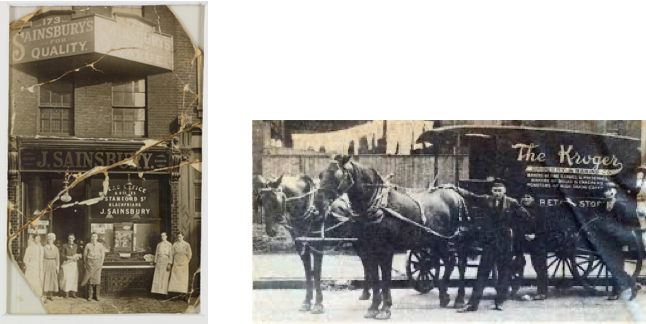
In the U.S., Barney Kroger invested his life savings in a Kroger store (1883) in downtown Cincinnati. His key insight was that if he could bake his own bread, he’d cut the wholesale price, since local grocers often bought bread from other bakeries. His insight proved accurate, and in 1901 Kroger became the first grocer to integrate bakeries into its stores, later adding a butcher. Today, Kroger has over 2,700 stores generating $147 billion in revenue. There are two lessons here.
Lesson 1: Small insights, significant outcomes. In staples retail, giant chains are often built from small insights into how retail stores could be run more efficiently. Sainsbury’s focused on hygiene and tiled the ceiling and floors to improve cleanliness, while also sourcing cleaner milk from farms farther out of London, unlike the 1870s practice of peers who kept cows in their basements.
Many other grocery retailers created big chains from what seemed like small insights; Dino Polska in Poland integrated fresh meat counters into its stores from its own meat plants, leading to higher margins. Costco in the U.S. operated with smaller SKUs but larger volume, leading to higher turnover and lower handling costs. It’s sometimes difficult for incumbents to change existing formulas, and if your original insight proves true, these ideas often lead to more stores, higher customer volumes, and greater loyalty. Of course, building a grocery retailer business doesn’t end with just the insight.
Lesson 2: Test of time. The Brits were the first to establish their grocery and staples market. Today, Waitrose, Sainsbury’s, Tesco and Morrisons have proven that staple retail can pass the test of time as each has been around for over a century. Several emerging market staple retailers I will discuss later in this article are only in their second or third decade, and, as history shows, as long as they stay innovative, cost-conscious, and customer-first, they can survive for many more decades. Of course, passing the test of time in no way guarantees it will deliver outstanding returns over the entire period.
The 1900s
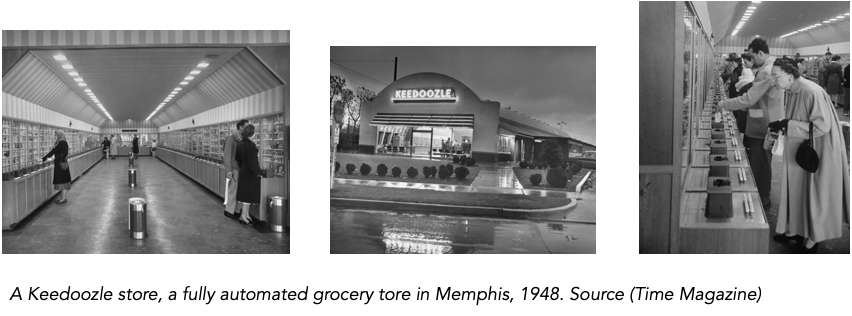
Until the 1910s, supermarkets operated over the counter, where customers asked the store clerk to retrieve items from the warehouse and inventory before purchasing. However, Clarence Saunders, the founder of Piggly Wiggly (1916) and Keedoozie (1948), invented the format that is more common today, with shopping baskets, open shelves, and self-service. Saunders’ innovation led to higher store and inventory volumes, shorter wait times and a more thriving retail format. Clarence Saunders would later lose ownership of Piggly Wiggly after speculating on its stock in the 1920s, as documented in the book Clarence Saunders and the Founding of Piggly Wiggly.
Clarence’s third venture, Keedoozie, created the first automated grocery chain in 1948. At first, the store model seemed promising, but the automated model proved more complicated than using shopping carts. The conveyor-belt system also wasn’t efficient for customers. He closed the stores a year later.
Beyond Clarence Saunders’ many innovations, the grocery retail industry continued to further gain from broader societal and technological shifts. First, the creation of the modern home refrigerator, led by General Electric’s Monitor-Top in 1927, and several compressor-based cooling systems in grocery stores helped preserve fresh food items, allowing individuals to purchase in bulk and reduce their reliance on daily services such as milk, fishmonger, and ice deliveries.
The introduction of automobiles, in particular, increased access to grocery stores, leading to higher shopper volumes and more competition as shoppers could now visit several supermarkets before selecting their preferred price. So while volumes typically increased from these innovations, grocery retailers often had to lower prices and increase store size, as each innovation ushered in more competition and lowered price discovery hurdles.
The next wave of innovations and changes came after World War II, when food rationing ended and consumer prosperity increased. Weekly shopping trips became part of the average household routine. To take advantage of the increased volume, the American “big box” retail format, an idea copied from the department store industry, became more prevalent with more companies entering the sector, such as Aldi in Germany, Carrefour in France and Albertsons and A&P in the U.S.
Over the following decades, more retailers such as the aggressive discounters like Walmart and Lidl (1960s), the convenience stores like 7-Eleven and Circle K (1970s), the hypermarket chains Sam’s Club and the Price Club (1980s) entered the market, each bringing their innovations, customer and store approach, transforming supermarket and grocery retailing into what we know it as today.
Lesson 3: The beneficiaries. I call some industries and companies “the innovation beneficiaries“. These are companies within industries that often benefit from new technologies and innovations, leading to either improved cost structures or higher volumes. Grocery retail is a good example of this, and over the course of the century, each major industrial or technological innovation, such as automobiles, electricity, and the internet, has created efficiency gains or volume growth for grocery retailers. In today’s AI world, we’d likely see further applications in existing retailers like Walmart and Costco, leading to even more volume growth.
Lesson 4: First to market doesn’t always win. Given the hyper-competition in grocery retail, it’s often assumed that the first to market a specific technology or format is the biggest long-term winner. This is false. Despite the several innovations Clarence Saunders brought to the retail industry, he never truly achieved long-term success, as seen with the likes of the Waltons or Costco.
The other significant innovation in grocery retail was the IBM UPC Barcode & Scanning System, which reduced labour intensity and improved the checkout process. Despite Marsh Supermarkets becoming the first to use this technology, they never achieved great success overall, while Walmart achieved more than 40x their annual revenue a few years later. Today, Marsh is a subsidiary of Kroger.
2. The Staples Retail Formats
While I’ll take the published store counts with a pinch of salt, some analysts estimate that in Europe, Germany, France, and the UK each has between 32,000 and 37,000 grocery stores, the U.S. has around 78,000 stores, while Canada has around 11,000 stores. Even if these figures were accurate, the difficulty in comparing countries by number of stores is the wide range in each store. A single Costco store in California, U.S. ($298 million), generated as much revenue as 1,000 Alfamart stores in Indonesia.
It’s why we categorise grocery stores, and here, there are five main categories:
Hypermarket
Warehouse
Convenience
Discount
Supermarket
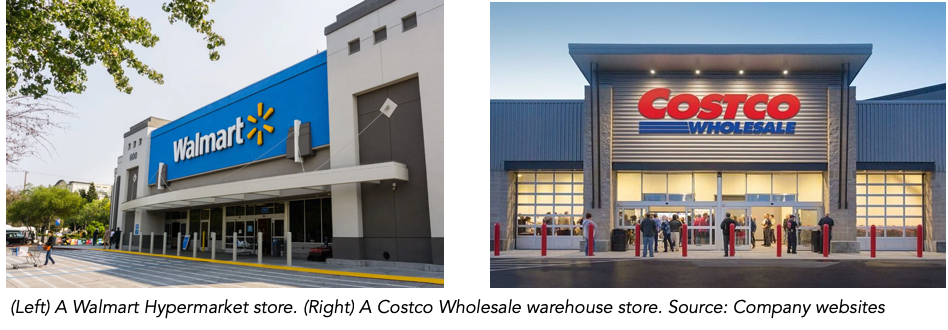
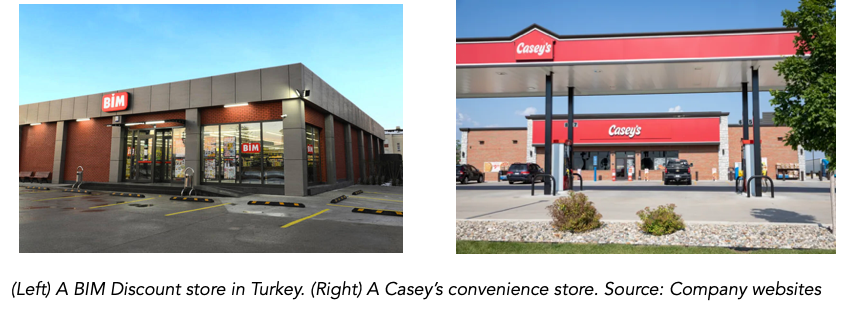
The first three, hypermarket, warehouse and convenience have unique store formats and product assortments. Discount stores use ultra-aggressive pricing, while supermarkets are stores outside the four other segments and are typically mid-sized. The table below lists the five categories and highlights key features, including average store size, assortment breadth, pricing strategy, location, and listed examples.
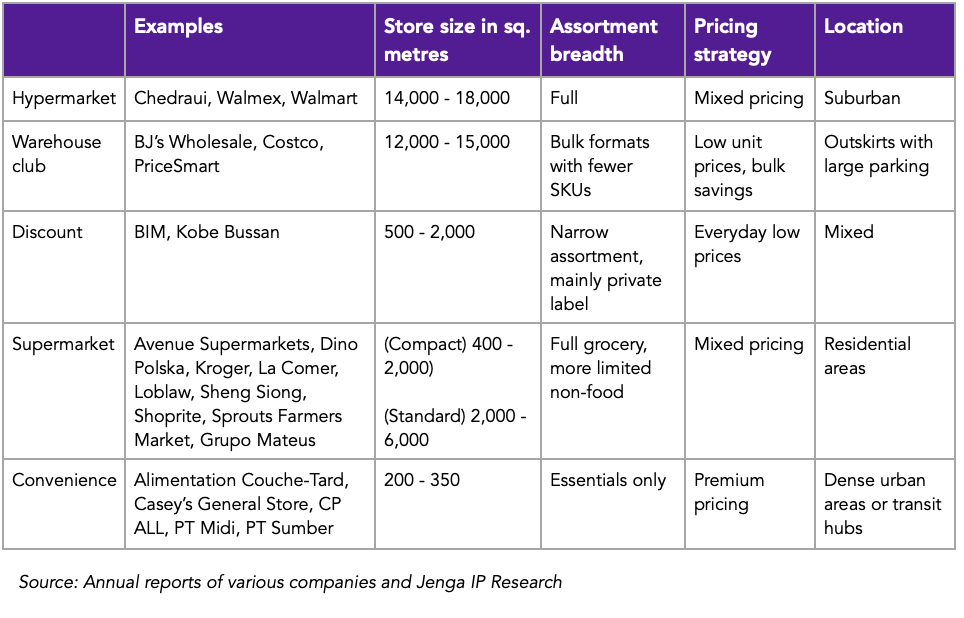
Each of these staple retail types has its strengths and weaknesses. Personally, due to the sheer size, membership plans, customer loyalty and required Capex for new entrants, the warehouse club, followed by Hypermarkets, are my preferred choices from a moat and quality lens. It’s far more difficult competing with a nearby Costco warehouse with 13,000 square metres of store space than a 200 square metres Alfamidi store.
The downside of these warehouses is the difficulty of adding new stores. Costco has grown its store count by just 3% each year over the past decade and relies more on per-store volume growth for overall EBIT growth.
At the other end of the spectrum are convenience and discount stores, each with its own model. Discount stores have been the most aggressive over the past decade, and to win, they often utilise private-label brands rather than purchasing bulk items from popular FMCG companies. BIM in Turkey’s private label brands accounts for 59% of its total product portfolio, from 46% in 2005.
In the middle, by store size, are supermarkets, which are further classified into two types: compact supermarkets such as Dino Polska (Poland) and Avenue Supermarket (DMart in India), and standard supermarkets such as Loblaw (U.S.) and La Comer (Mexico). These stores offer mixed pricing and a complete grocery offering, but with a more limited non-food range than hypermarkets.
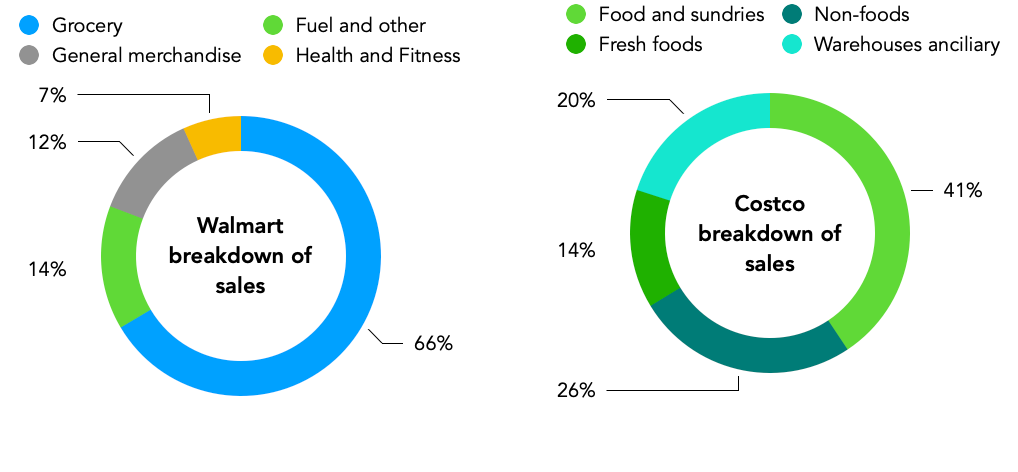
It’s worth noting that some companies operate in multiple formats. Walmart is a good example, as it has each Hypermarket (Walmart Supercentre - 3,559 stores), Discount (Walmart Discount - 355 stores), and Warehouse formats (Sam’s Club - 600 stores), as well as the British grocers Tesco and Sainsbury’s.
Inside the grocery store
Another challenge during my research was accessing an official, globally accepted list of product categories in staples retailing. It seems there isn’t a unified list, which again highlights the investment case for a more domestic staples retailing.
After studying the various formats, local spending patterns, and priorities, I developed my own list of staple retail categories. In the table below, I highlight all 18 segments, list their items, and score each category on four key attributes: gross margin, sales recurrence, purchase lock-in, and supply chain efficiency. The 18 categories are scored 0-10, with 10 being the most favourable (i.e., highest gross margin, most recurring sales, etc.). I then sorted the table by their average score across all categories.
Gross margin: Measures the revenue net of the cost of sales (purchase cost and transportation) for the average product within each category
Sales recurrence: Measures the degree of repeated sales from the customers. Are customers likely to purchase items daily (fresh food), weekly (fuel), monthly (health, beauty and OTC), annually (apparel), biannually or less (garden, outdoor and auto).
Customer loyalty: Measures how loyal customers are likely to be to the retailer, the scope for product or service trust, and the degree of opportunity for private-label products. Products related to health, such as baby and pet care, are more likely to have scope for building customer trust with retailers.
Supply chain efficiency: Measures the effort, time, and just-in-time requirements for purchasing, transporting, and storing items. Products with shorter shelf lives tend to have lower supply chain efficiency (e.g., fresh food). Products with fragile or specialist supply chain methods (home & kitchen, frozen & dairy) also score poorly here.
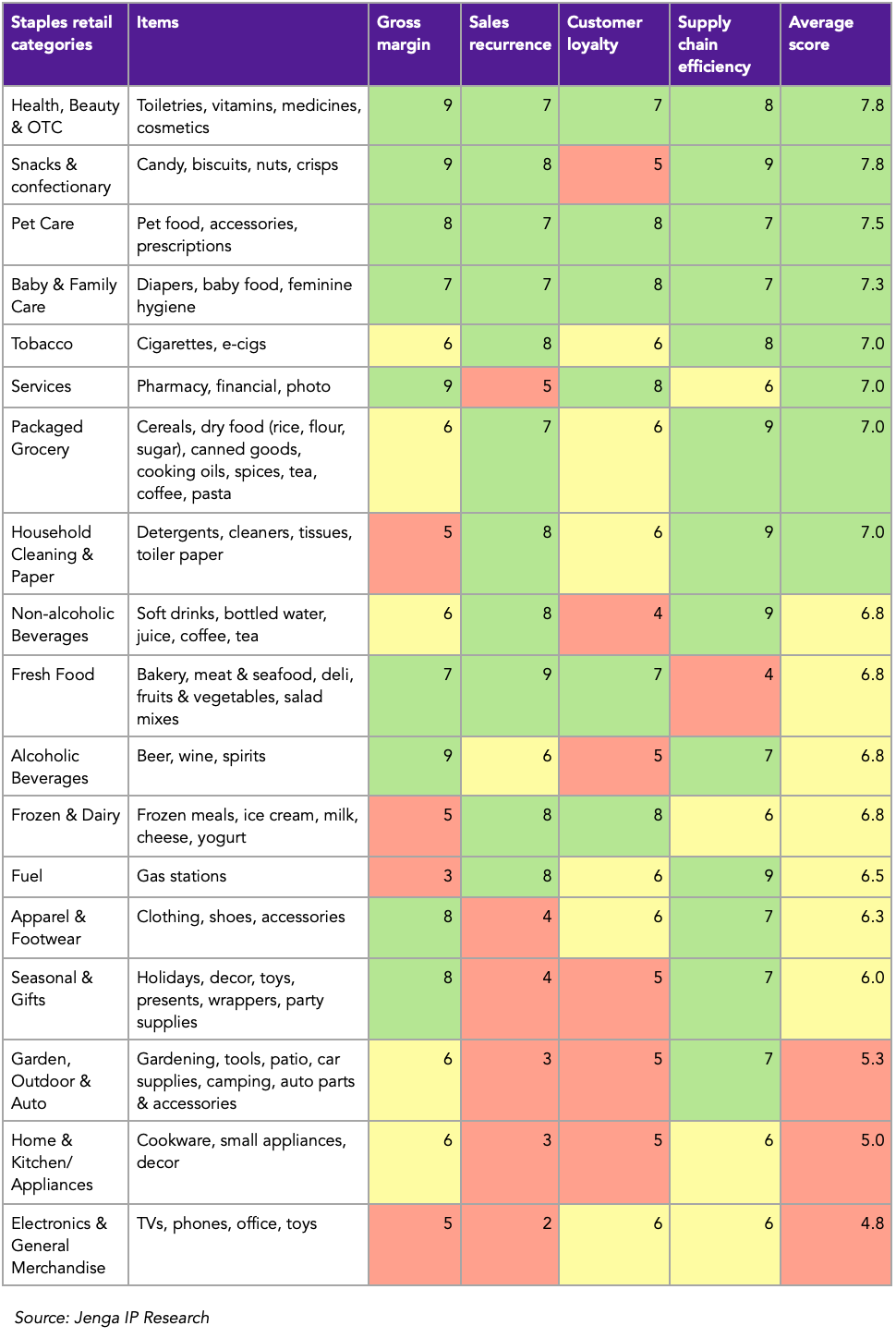
In a perfect world, retailers want items with high profit margins, high sales recurrence, high customer loyalty, and minimal supply chain costs and time. However, very few categories offer all four, and from the table, only three categories, health & beauty, pet care and baby & family care, perform well in all four categories.
More often, there’s an opportunity cost. For example, fuel, which is relatively easy to supply in the supply chain and has recurring sales, doesn’t have good gross margins. Casey’s General, a well-run American convenience store, for example, makes 10-13% gross margins on its fuel sales (61% of revenue) but in its general grocery merchandise category achieves 35% gross margins.
A surprise during my research was Tobacco and alcoholic beverages. I had expected both to be significantly higher up the list, but from conversations with retailers I visited, it seems the days of higher margins in both grocery and alcoholic beverages have long gone due to additional regulatory pressure, particularly in the more developed markets.
In emerging and developing markets with much less regulatory pressure, both categories tend to have higher profit margins. Alcoholic beverages account for roughly 7% of Shoprite’s sales and likely represent a higher percentage of its gross profits.
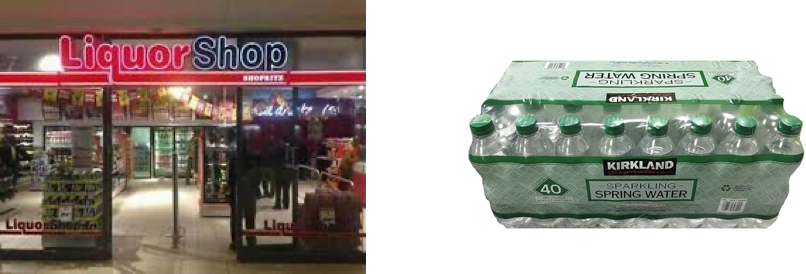
At the bottom of the category list are garden & auto, home & kitchen appliances and electronics & general merchandise. These three categories are held back by a common factor: low sales recurrence. TVs, cookware, or auto parts are purchased only every three or more years, which conflicts with the fast inventory turnover preferred in the staples retail industry. Also, there’s less scope for private label in these categories, and customers often have a brand preference. This is quite different from categories like frozen & dairy (8/10), where there’s more scope for private label and customer loyalty with the retailer. Costco’s Kirkland is often cited as exemplary in this category, and it’s estimated that the private label generates over $50 billion in annual sales.
Finally, it’s important to note that margins will vary across the staple retail types (hypermarkets, discount stores, etc.), by location, and by culture. Regions with lower specialist alternatives give staples retailers more pricing power with consumers. For example, research shows that Australians garden more frequently than Europeans or Americans, leading to a shorter replacement cycle, which explains why domestic retailers like Woolworth’s have gardening tools at a higher percentage of their total SKUs than in non-Australian markets.
3. The global staples retail listed market
A short personal journey
I started my journey with Jenga Investment Partners in October 2019, initially investing only in South African equities, a market I thought was then cheap with lots of opportunities. I was then 20, having never visited South Africa.
My third of 16 investments in the country was Shoprite, the domestic grocery leader. My investment thesis for Shoprite was quite simple. It had a formidable track record, performing very well in South Africa, but had struggled in other African markets, particularly Nigeria. Within the next two years, its shares had more than doubled, and I then exited our position.
The Shoprite experience taught me two things. First, seeing how resilient Shoprite was in 2020 during the pandemic taught me about the moat grocery retail had - resilience during economic shocks. Second, grocery retail is mainly a national market, not an international one.
With both insights, I began looking more globally for retailers with Shoprite-like quality and growth prospects. It took a while, but I later found an opportunity to invest in Dino Polska in October 2023. The challenge, though, was that my research into grocery staples was largely unstructured, so earlier this year I finally decided to add some structure to it.
An A-Z search by country
Earlier this year, I examined the broader consumer staples distribution and retail industry on an A-Z basis, with 339 companies starting with A (Argentina) and ending with the U (the U.S.). Of the 339, 64 companies (19%) made it past the first stage; 37 were grocery retailers, with the rest being pharmacies or distributors.
My next stage was to study these 37 grocery retailers further, and of the 37 companies, 22 passed my quality hurdle. In the table below, I highlight these 22 companies and include seven key metrics:
10-year average EBIT margin: The average
10-year average return on capital
10-year revenue growth CAGR
10-year EBIT Growth CAGR
10-year average EBIT/Interest expenses
10-year average P/E ratio
The current P/E ratio
Their figures are converted to USD to ensure greater consistency in the comparisons. Please see the additional notes in the table below.
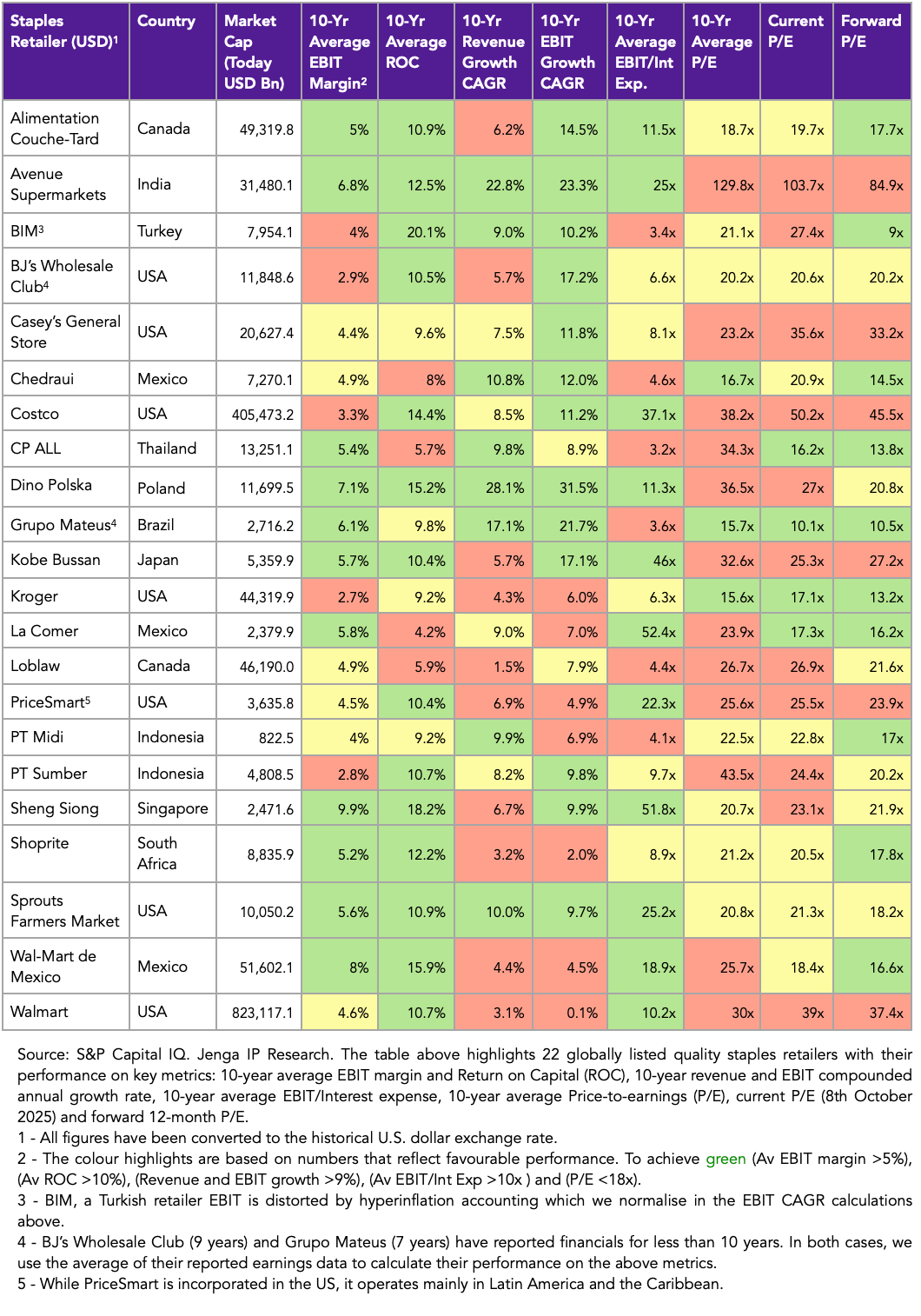
There’s a lot of data presented in the table above, and I’ll break down my analysis with some key findings below:
Profitability
Leaders: Sheng Siong, Dino Polska and Walmex
Most good retailers earn an EBIT margin of 4.5% but a more important proxy for staples retail profitability is the return on capital.
Three companies particularly stand out here: Sheng Siong (Singapore), Dino Polska (Poland) and Wal-Mart de Mexico (Walmex). Each of these companies has a very different founding story, store formats, and product catalogue focus, and they operate in very different consumer markets.
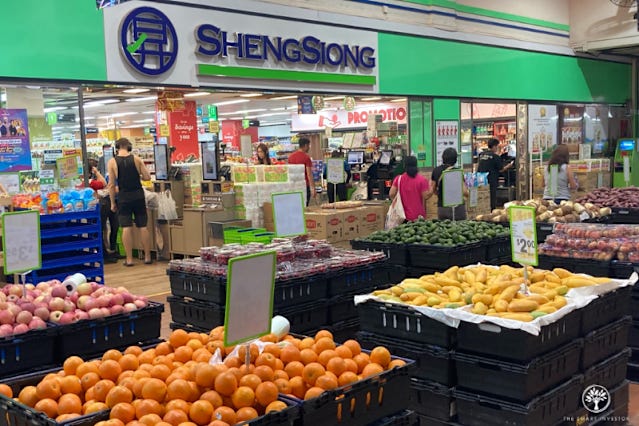
Sheng Siong, the best performer here, is unique. Its founders, the Lim brothers, shifted into grocery retail out of desperation when the Singaporean government shut down the pig-farming sector. In the early days, the Lim brothers ran an “ultra-ultra lean” store with staff consisting of just the three brothers, their six sisters and one external employee. Despite five nearby stores, theirs was the only chain that survived due to their customer obsession and cost consciousness.
I’m told the brothers would often help customers carry their grocery bags up the stairs as they strongly believed in customer service and offered them the lowest prices. Today, there are 83 Sheng Siong stores at an average of 810 square metres with a sales efficiency of around $16,400 (SGD 21,300) per square metre. For context, top-performing retailers like Walmart’s U.S. stores achieve a sales per square metre of $7,170, while the other profit leader, Dino Polska, earns a sales per square metre of $6,670.
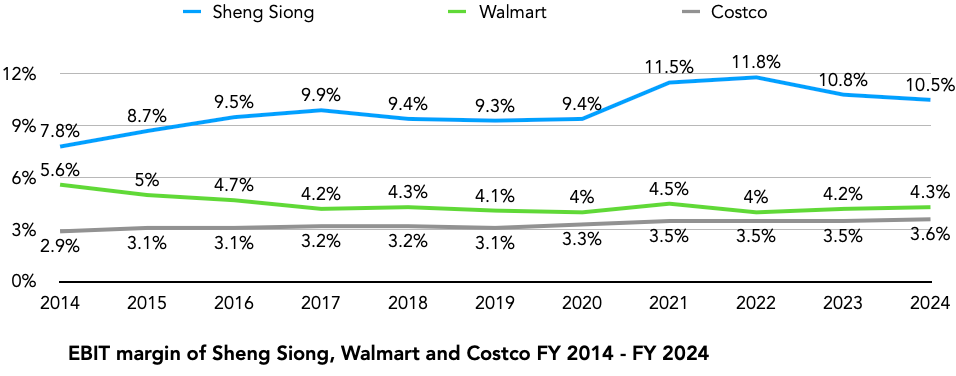
The founder’s background in farming also kept the chain vertically integrated, particularly in fresh foods, and with the support of its growing private label products, Sheng Siong has seen its EBIT margin increase from 7.8% in 2014 to 10.5% EBIT margins today, the highest among all companies.
Growth
Leaders: Grupo Mateus, Avenue Supermarkets and Dino Polska
Emerging-market retailers grew much faster than their developed-market peers in USD terms, led by Avenue Supermarkets (India), Dino Polska (Poland), and Grupo Mateus (Brazil), with Dino Polska leading the growth. I currently own its shares, and to avoid any bias, I’ll move on to the second-fastest grower, Avenue Supermarkets.
Avenue Supermarkets has a particularly unique story. Its founder, Radhakishan (RK) Damini, started as a stockbroker before transitioning into a value investor with a quality bias in the 1990s, just like Warren Buffett. At the start of the 2000s, after some experience operating a department store, he entered the supermarket industry and founded Avenue Supermarkets, the parent company of DMart.
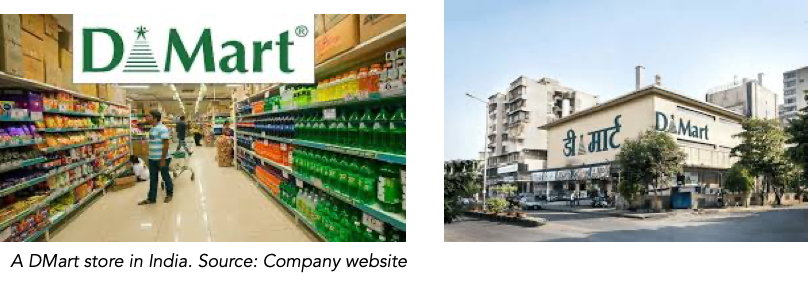
RK realised there were several pockets of efficiency gains he could incorporate into DMart’s operations to improve its staples retail model. For example, to get products cheaper, he paid vendors within 11 days rather than the norm of 21 days, resulting in lower inventory procurement costs. He also targeted areas with large residential populations, focusing on the middle class, initially in the Maharashtra and Gujarat regions. He also found a niche within the hybrid supermarkets (2,800 square metres), which are smaller than hypermarket chains like EasyDay, Big Bazaar and Spencer’s.
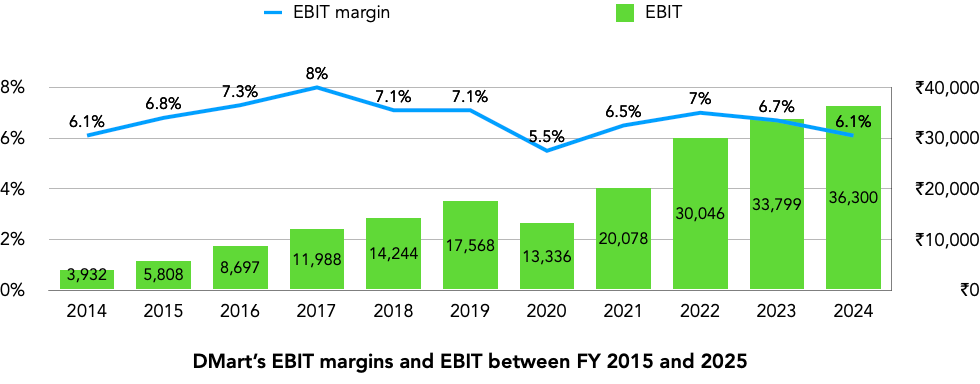
At the time of its IPO in 2017, organised retail accounted for just 3% of total food and grocery sales in India, representing a tremendous growth opportunity for DMart. Between 2014 and 2024, DMart’s stores increased from 75 to 415, an 18% compounded annual growth rate, and with an additional boost from organic growth, its revenue compounded at 22% over the 10 years.
DMart is an exceptional retailer. Beyond its formidable track record, it’s got great growth potential given India’s low organised retail penetration, strong EBIT margins typically between 6-7% and a fast payback period in new stores. The issue, however, is its valuation at 103x earnings!
If shares stay flat for the next 5 years and earnings grow at a 20% CAGR during that period, its shares will still be at 40x earnings five years later. As a result, DMart is on our expensive watchlist.
On average, these 22 companies grew their revenue by 9% and operating earnings (EBIT) by 11% annually over the past ten years. Quite impressive for what is expected to be a slow-growing industry.
Valuation multiples
Over the past 10 years, these 22 companies traded at a median earnings multiple of 23x and are currently trading at a forward earnings multiple of 19x. Not cheap by any standards, but that’s the price to pay for companies growing earnings 11% annually with resilient earnings that can cope in nearly all economic, financial or political environments.
As with growth, there was a clear divergence between developed markets, particularly the U.S., and emerging market companies, despite the latter registering higher profitability and growth than their U.S. counterparts. A good example portraying this gap is Walmart and its Mexican-listed subsidiary, Walmex.

Despite the Mexican chain averaging much higher EBIT margins and return on capital, growing substantially faster at both revenue and earnings, operating with a better balance sheet with more market power in Mexico than in the U.S., Walmart (37x) was valued more than double the earnings multiples of its Mexican subsidiary (17x). This exemplifies the current American premium seen across markets.
Beyond Walmex, the other two Mexican retailers, Chedraui and La Comer, seem interesting from a valuation multiple lens. Along with Soriano and Bodega Aurrera (owned by Walmex), these five companies make up the largest players in Mexico’s organised retail market.
Each of these companies has quite different market focuses. La Comer, the smallest among them, focuses on the more upscale market, and, relative to Western chains, its City Market stores are similar to Amazon’s Whole Foods. In contrast, its Fresko chain is identical to Waitrose in the UK.
Since it was reorganised by the González family in 2016, La Comer has grown its operating earnings by 22%, with stores growing at 5.7%, from 57 to 89 today, well below the 117 stores initially planned for 2022 at the time of its IPO. Store growth is generally much harder in upscale staples retail, especially in emerging countries like Mexico, but compared to the average, La Comer has certainly performed better.
Beyond the Mexican companies, Grupo Mateus, a Brazilian supermarket chain focused on the Northeast region, is one I particularly like. In my next deep dive, I’ll examine its investment case.
4. A Quality Analysis
The next research phase was to select 10 companies worth deep-diving into. While these companies aren’t necessarily the ones with the best risk and reward, e.g., some, like Costco and Walmart, publish significantly more information to shareholders on their store operations and are also the highest-quality businesses in retail, thus serving as good reference points to expand our understanding of grocery retail.
In the table below, I highlight the ten companies I selected for the core quality study and score them on our ten quality categories, from new entry difficulty to test of time (see the table below). If this is your first time encountering my quality scoring system, you can read more about it here.
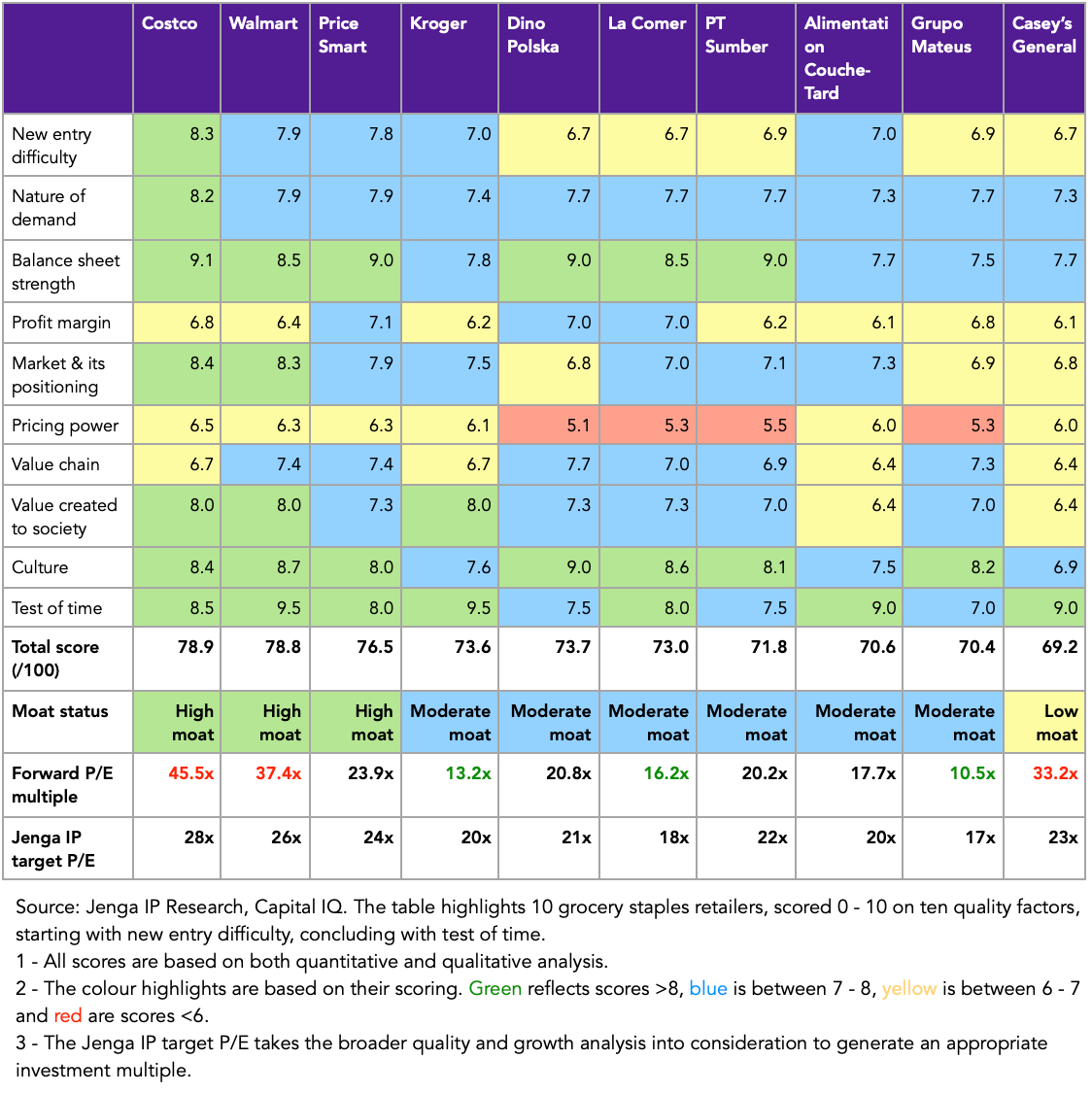
The ten companies (5 developed and 5 emerging markets) were then ranked by total quality score, left to right, starting with the highest: Costco at 78.9 out of 100. Finally, I included their current forward earnings multiples and the target multiple I’d want to pay for their shares over the long term.
Before diving into the three moat categories, I will briefly discuss some critical trends that shaped the quality score for the majority of the staple retailers.
Pricing power weakness
As I mentioned at the start of the deep dive, staple retailers lack pricing power, and their business model requires them to keep prices low to grow same-store volumes over time. In my quality rating, these companies ranged from Dino Polska’s 5.1 to Costco’s 6.5. For context, tech companies I’ve researched, like Apple (9.2) and Microsoft (9.1), are well ahead of these retailers.
Market share, competitiveness, and pricing longevity track record were the main factors considered when determining the scores here. It’s also important to note that Costco, Walmart, and PriceSmart each benefit from membership warehouses to varying extents, which supports their pricing power, given the pricing stickiness.
At the other end, Dino Polska and La Comer’s pricing power weakness stems from their smaller market share and volume relative to their individual market leaders. Biedronka in Poland, for example, took advantage of its market leadership during the most recent Polish grocery pricing war, a period during which Dino Polska EBIT margins declined from 7.8% to 6.6% between 2022 and 2024.
Profit margin weakness
Another key point we discussed at the start of the deep dive was the slim margins in grocery retail. Here, the convenience stores Alimentation Couche-Tard and Casey’s General are particularly weak, and the key reason is their reliance on fuel sales as a percentage of total revenue. Fuel is usually one of the lowest-margin items for staple retailers, and its volatility throughout the economic cycle also impacts retailers.
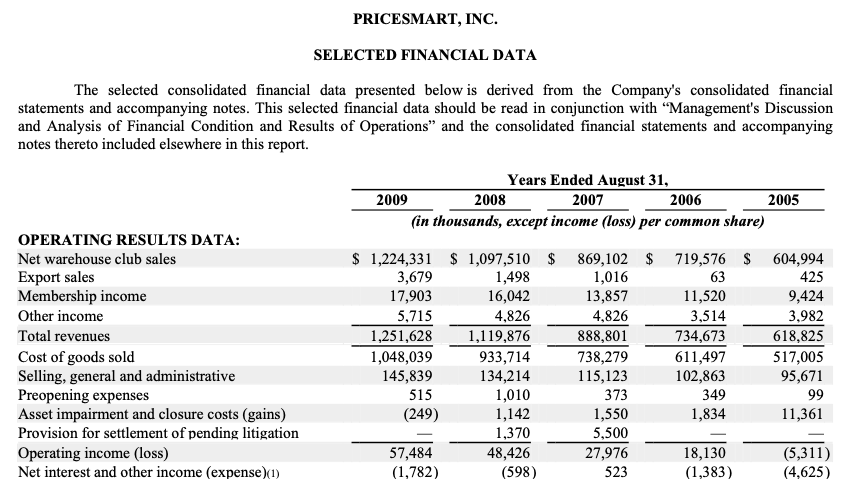
Among the top performers, PriceSmart, the Caribbean’s and Latin American warehouse retailer, would seem like a surprise given its average 4.5% EBIT margin over the last 10 years. Its 7.1/10 score in the profit margin category was supported by two other factors beyond EBIT margin when assessing profit margins: the lowest-cost producer and durable margins during downturns. Profitability-wise, PriceSmart is actually one of the most resilient retailers globally. In many of its markets, PriceSmart is often the only warehouse membership chain, giving it 100% market share in its category.
Excluding the two categories, pricing power and profit margin, the ten grocery retailers scored well (7 or above) in the remaining eight categories. To further support my analysis, I’ve also included per-store calculations, which, in my view, are the single most important data points in grocery retailing.
Store level calculations
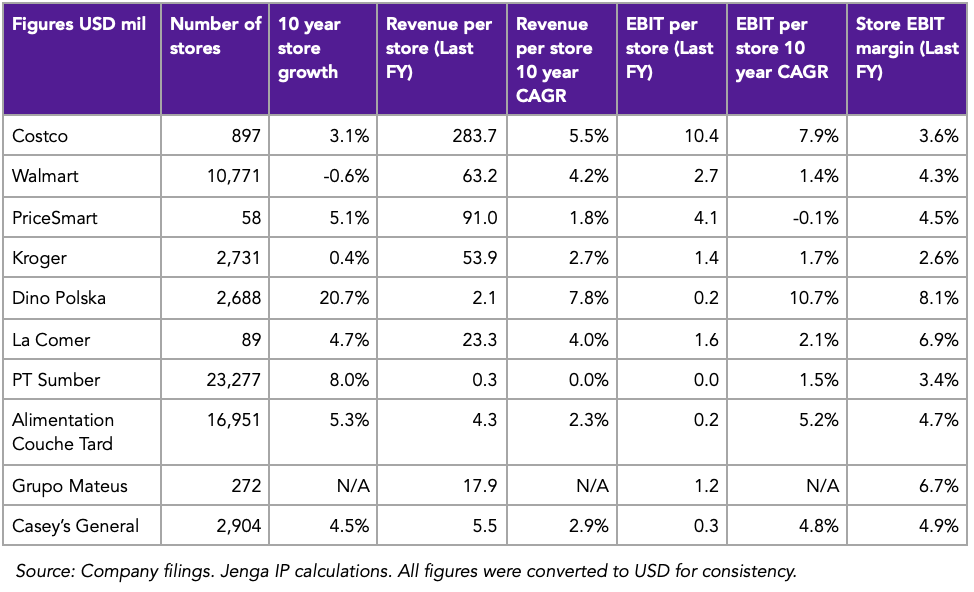
Here, I include the number of stores as at their most recent FY, the 10-year store growth, revenue and EBIT per store, store profit (EBIT) margin and the revenue and EBIT per store 10-year compounded annual growth rate. I also wanted to add revenue and EBIT per square metre (not all stores are the same), but only 5 of these 10 companies publish their official retail sales area in their annual reports.
The high moats (>75/100)
Costco, Walmart and PriceSmart
The three companies were added to our list of high moat businesses, with Costco marginally ahead of Walmart as the highest-quality retailer in the analysis. Three things set Costco apart from the rest.
First, Costco’s $4.8 billion in annual membership earnings, currently at 90.5% worldwide renewal rates, is likely a 90% EBIT-margin business for them, representing nearly 50% of its EBIT margins. That’s a sticky earnings stream no retailer in the world can replicate (Walmart comes close) and sets its barriers to entry and the nature of its demand higher than any other retailer, when combined with its low operating costs and scale.
Second, Costco’s stores, on average, are the largest in the staples retail sector, earning roughly $284 million in sales (including ancillary income), far above those of any other company. The sheer size of its stores, from a real estate and Capex lens, further extends the barriers to entry when competing with Costco. It’s much easier for budding entrepreneurs in the grocery industry to compete with convenience stores or supermarket chains than to build a store beside Costco.
Finally, Costco’s moat is further solidified in its market & positioning. Only two of these ten retailers have successfully grown profitably beyond their home country, and today, almost a third (280 of 897 stores) of all Costco stores are outside the US. More impressively, its international stores are actually more profitable than its U.S. stores, despite its larger scale in the US.
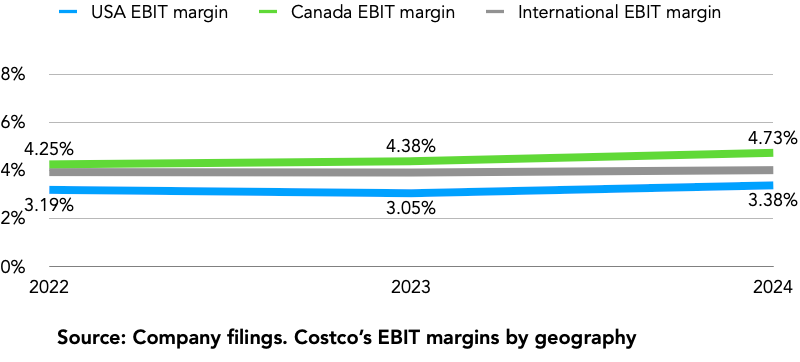
These three factors put Costco in a league of its own. The important question is, why haven’t we invested in Costco?
The market is clearly aware of its business strength, currently valued at 46x forward earnings. To achieve a 9% IRR and a 29x exit multiple in 5 years, Costco will need to grow its net income by 21% per year over that period. I doubt this is possible.
PriceSmart, on the other hand, while not as high moat as Costco, although with a similar business model, is priced at more realistic valuations and is now one of the three businesses we are particularly interested in from the 10-company list.
The moderate moats (70 - 75)
Kroger, Dino Polska, La Comer, PT Sumber and Alimentation Couche-Tard
The bulk of the shortlisted companies fell into the moderate moat companies, each with different strengths and weaknesses.
I. Balance sheet strength
Dino Polska, PT Sumber and La Comer
The first two things I assess when researching grocery retailers are their liabilities on the balance sheet and the number of store buildings they own. Highly leveraged grocery retailers (>3x net debt/EBITDA) are often challenging to deleverage without raising additional equity, given the level of competition and Capex required.
The three companies mentioned above ranked above their peers in terms of debt and balance sheet strength.
From a debt level lens, all three successfully further deleveraged their balance sheets, with their total debt-to-EBITDA currently between 0.2 and 0.5x. Both PT Sumber and La Comer remain in net cash positions, providing ample resources for further store growth and CapEx financing.
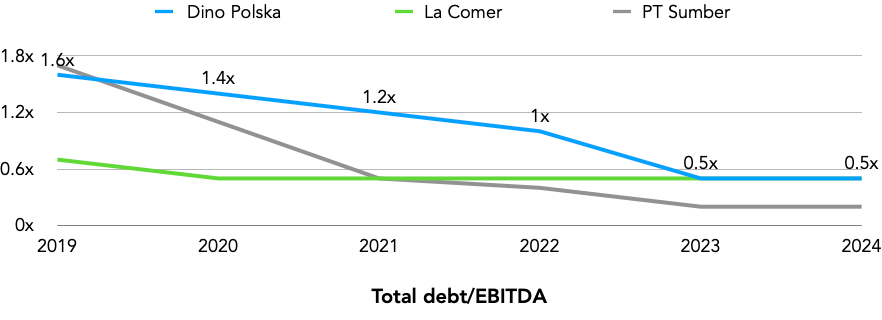
They also aren’t reliant on acquisitions for growth, and on the asset side, there aren’t any significant intangibles or goodwill, particularly in Dino Polska—they also own the majority of their store land and buildings outright, providing further flexibility and balance sheet strength.
Test of time
Kroger and Alimentation Couche Tard
Admittedly, I don’t rate Kroger as highly as its U.S. major rivals, Costco and Walmart, from a moat lens, because it operates with slimmer margins, lacks recurring membership income, and is geographically limited to the American market. That said, the one advantage Kroger has over both companies is that it has proven it can survive for many decades and has passed the 100-year test, a feat very few companies can claim, which explains its 9.5/10 in the test of time category.
Alimentation Couche-Tard, on the other hand, hasn’t been around that long, founded in 1980. It has, however, done quite well in the more volatile category of grocery retailing, convenience stores. It’s grown beyond Canada and now operates in over 30 countries, successfully replicating its model in several international markets, thus justifying its higher-than-average score in the test of time quality category.
Overall, I do like the moderate moat companies, especially when valuations are considered; Kroger at 13x forward earnings looks more attractive than Walmart at 37x, despite the quality differences.
The low moats (65 - 70)
Casey’s General
You’re forgiven if you are an American reader and have never come across a Casey’s General store. The convenience retailer is focused only on the Midwestern and Southern U.S., including states like Kansas, Nebraska, and Texas. During my trip to the Berkshire Hathaway conference in Omaha, Nebraska, earlier in May, I looked out for Casey’s stores but sadly didn’t spot any. I’m told Casey’s focuses on areas with fewer than 20,000 people, aiming to be one of the few options for customers in these regions.

A lesser-known fact about Casey’s is that it’s the fifth-largest Pizza franchise in the U.S. and continues expanding its offerings in freshly prepared food within stores. That said, its success here isn’t enough to make up for the natural challenge convenience stores face, reliance on fuel sales. As we discussed in the “inside the store” section, fuel is among the lowest margin staples retail products; 61.3% of Casey’s revenue comes from fuel sales, but it only accounts for 33% of its gross profits, at 12.7% gross margins, compared to the 58% gross margins in its Pizza and dispensed beverage category.
As with Alimentation Couche Tard, reliance on fuel sales hurts its profit margins, as margins are more vulnerable to the cyclicality of fuel prices. This was particularly evident over the past two years, during which its revenue per gallon fell by 18%. Convenience stores like Casey’s also face lower barriers to entry than other formats, such as Costco’s warehouses or Walmart’s hypermarkets. A second convenience store in any of its Midwestern markets requires less effort and resources than building a competing hypermarket. Finally, convenience stores in general are less mission-critical to customers; they often serve impulse and top-up needs during long car journeys, and there’s the long-term threat of electric vehicles.
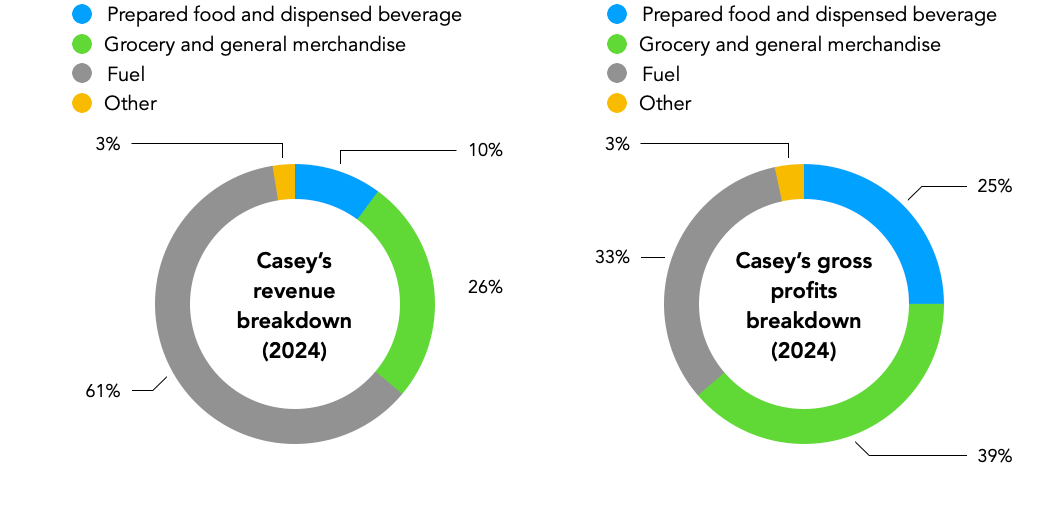
Even with these risks, I still find Casey’s General investable, and its 12% annual EBIT growth over the past decade is quite impressive compared to peers in other developed markets. At the per-store level, Casey’s is even more impressive, growing between 4% and 5% through the cycle.
However, 10 years ago, Casey’s was valued at 19x earnings; today, it’s 33x forward earnings, well above where I value its business over the long term. For now, it stays on our expensive shortlisted companies.
Of the ten companies, we own Dino Polska in Poland and have transitioned Grupo Mateus to the final stages of due diligence. La Comer in Mexico and Kroger have also been transitioned to the core shortlist, and I continue to monitor PT Sumber for further price declines.
5. Grocery case studies
There are some other key themes I haven’t discussed in substantial depth, such as the growth of private label, the opportunities and threats of e-commerce, and case studies on sustained growth.
Private label - BIM (Turkey)
Before my interest in staples retailing, I studied the packaged staples industry (Nestle, Hershey’s, Kraft Heinz, and the like), but realised the industry’s most significant challenge is the growth of private label. Private labels are typically more profitable for retailers than purchasing premium brands. It also helps the retailer’s value chain resilience and further supports the vertical integration plans. Arguably, no other company has been more successful in the private-label market than the discounters, particularly Turkey’s BIM.
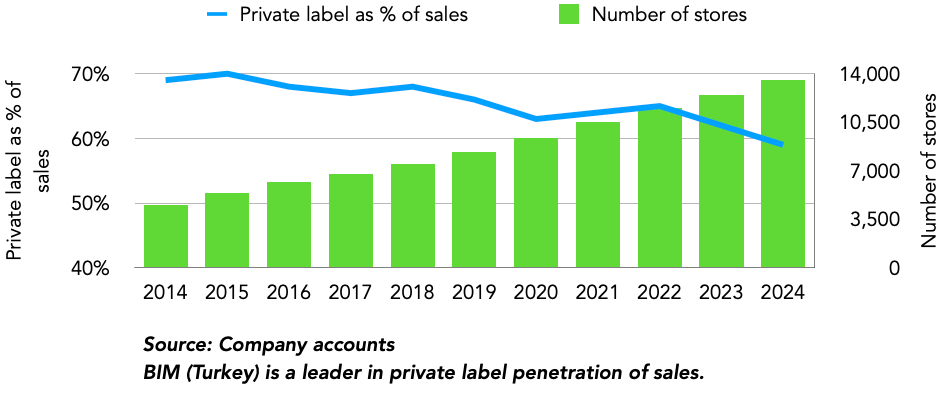
Over the past decade, private label as a percentage of revenue has consistently been more than half of BIM’s sales, and its path here has been more of survival. Turkey’s inflation and currency devaluation have been particularly challenging, and purchasing imported products in euro or dollar terms while selling locally in Turkish Lira didn’t make sense for BIM. After its 2005 IPO, BIM invested heavily in private-label products and has become one of the most vertically integrated retailers globally.
E-commerce
E-commerce remains a hotly debated topic for the staples retail industry. Will the current players be further enabled by e-commerce, or will it usher in a new set of staple retailers?
While I have my views here, it’s essential to focus on the facts and in the chart below, I share the reported e-commerce as a percentage of sales across ten major grocery retailers.
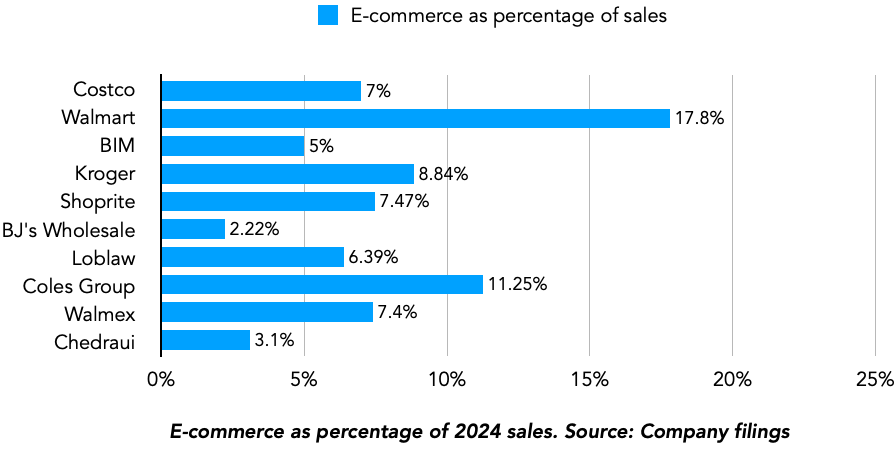
The e-commerce approach varies across companies. There are some players like Dino Polska who have virtually no e-commerce operations, some like Shoprite in South Africa who’ve built and scaled dedicated apps to support their e-commerce operations and others like Walmart who have doubled down on e-commerce, integrating it across its various operations and store formats.
Overall, from the companies that report their e-commerce sales data, the majority have e-commerce between 6-8% of sales and plan on growing it to 10% of sales within the next three to four years.
“Walmart U.S. e-commerce profitability continued to increase in Q2 as we make progress on improving net delivery costs and see strong momentum in advertising.” Walmart FQ2 2024 earnings call
“Capturing more digital households is important to accelerating growth in our model because these households are more loyal and spend nearly 3x as much as non-digitally engaged households. The additional households and traffic in turn create more growth opportunities in our alternative profit and health and wellness businesses” Kroger FQ4 2024 earnings call
At first glance, it seems that the English-speaking countries, Australia (Coles Group), Canada (Loblaw), the U.S. (Walmart, Kroger, and BJ’s) and South Africa (Shoprite) are investing more than the non-English-speaking countries. It’s not exactly clear to me on the main reasons driving this, but I suspect the threat from Amazon in these English-speaking markets keeps them more wary of the risks of not investing in e-commerce.
I also suspect that the opportunity in digital advertising is higher in the English-speaking countries, thus making e-commerce more lucrative in these markets. Australia and Canada are on par with Germany in digital ad spending, despite their economies accounting for less than half of Germany’s GDP.
Membership model
The membership model is a significant advantage for staple retailers, and Walmart, BJ’s Wholesale, and Costco continue to leverage their positions here.
Beyond recurring income, the membership model gives retailers an edge in positioning by offering lower pricing than typical supermarket or hypermarket chains. It also helps build brand loyalty; Costco reports that 90% of its global members are retained each year.
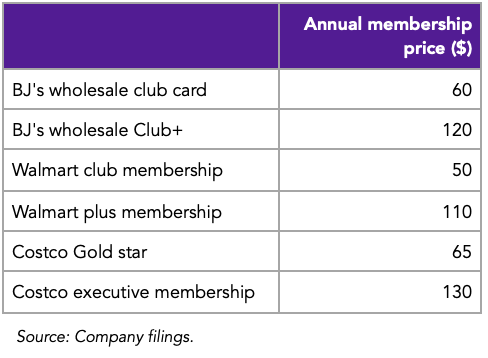
After years of keeping prices unchanged, both BJ’s Wholesale and Costco Wholesale recently announced some increases. The table below highlights current prices, and I expect the recent changes to boost EBIT by an additional 2-3% in the current fiscal year.
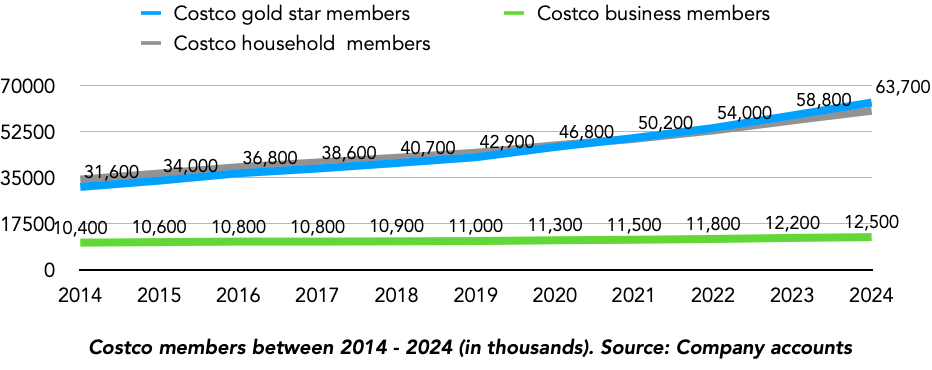
Costco remains in a league of its own, and over the past 10 years, it has grown its Gold Star members by 7.3% annually, while its total cardholders currently amount to 136.8 million, a 6% compounded annual growth rate over the past 10 years. Given that these recurring revenues tend to represent a significant portion of their EBIT, 20% for Walmart and 45-55% for Costco and BJ’s Wholesale, I believe they generally deserve a higher earnings multiple than regular retailers - stability as a moat.
Conclusion
The purpose of the report was to add additional literature on staples retail investing, a topic I’ve been particularly excited about over the past couple of years. So far, I’ve invested in two retailers: Dino Polska (a current position) and Shoprite (an exited position). After my deep dive into the industry, I transitioned to Grupo Mateus, PriceSmart, PT Sumber, Kroger and La Comer for further due diligence. While they aren’t at significant valuation discounts to the market, as we’ve discussed, despite their low margins and high Capex, staples retailers offer stability, downside protection and quality (test of time and high barriers to entry) to any portfolio.
Over the long term, I expect the staples retail industry to remain a core position at Jenga IP, alongside big tech and transport infrastructure.
In the deep dive, I attempted to present a global perspective on retail, explaining the case for why the sector offers and should continue offering lots of national champions around the world, in both emerging and developed markets. The 1980s had Walmart, the 1990s had Costco, the 2000s had PriceSmart (and many more), the 2010s had Kobe Bussan (and many more) and I’m sure the 2020s and 2030s will have even more outperformers from the sector.
A theme I didn’t discuss is turnarounds. Generally, turnarounds are particularly difficult to fix in the industry, especially in markets with strong competitors. That said, they are still present - my 2019 investment in Shoprite was partially a turnaround, but for context, its issues were limited to smaller non-core markets, and its fix was particularly easy: exit the markets!
It’s far better for investors to stick with long-term compounders, staple retailers operating in large economies with rising incomes and double-digit earnings growth potential. A bonus is if they can be purchased at mid-to-high teen P/E ratios.
Really enjoyed this write up - very comprehensive on the history of the industry.
On ecommerce and ads - before Covid the big 4 uk grocers were involved in e-commerce, but deeply struggling to make the economics work, Tesco even saying it would never be profitable and therefore being hesitant about growth of this channel given group level dilution. But of course this is increasingly where customers want to be. During Covid (the incremental volumes helped), but more FMCG ad spend shifted to online grocery because of improving ROAS (Tesco in particular had invested heavily in its tech stack enabling this). Since then the company has been reporting much more positively on the economics of this channel as ad income is supplementing the increased cost to serve (as well as other initiatives around picking efficiencies etc.).
A fascinating space to follow given the complexities and challenges.
A very insightful read