

Intuit reported its FY 2026 earnings results yesterday, and despite the negative market reaction, I was generally pleased with both its FY 2026 results and guidance for FY 2027.
I will discuss my thoughts and analysis in this article, but before I dissect the results, I want to first mention three management decisions Intuit made that were quite good.
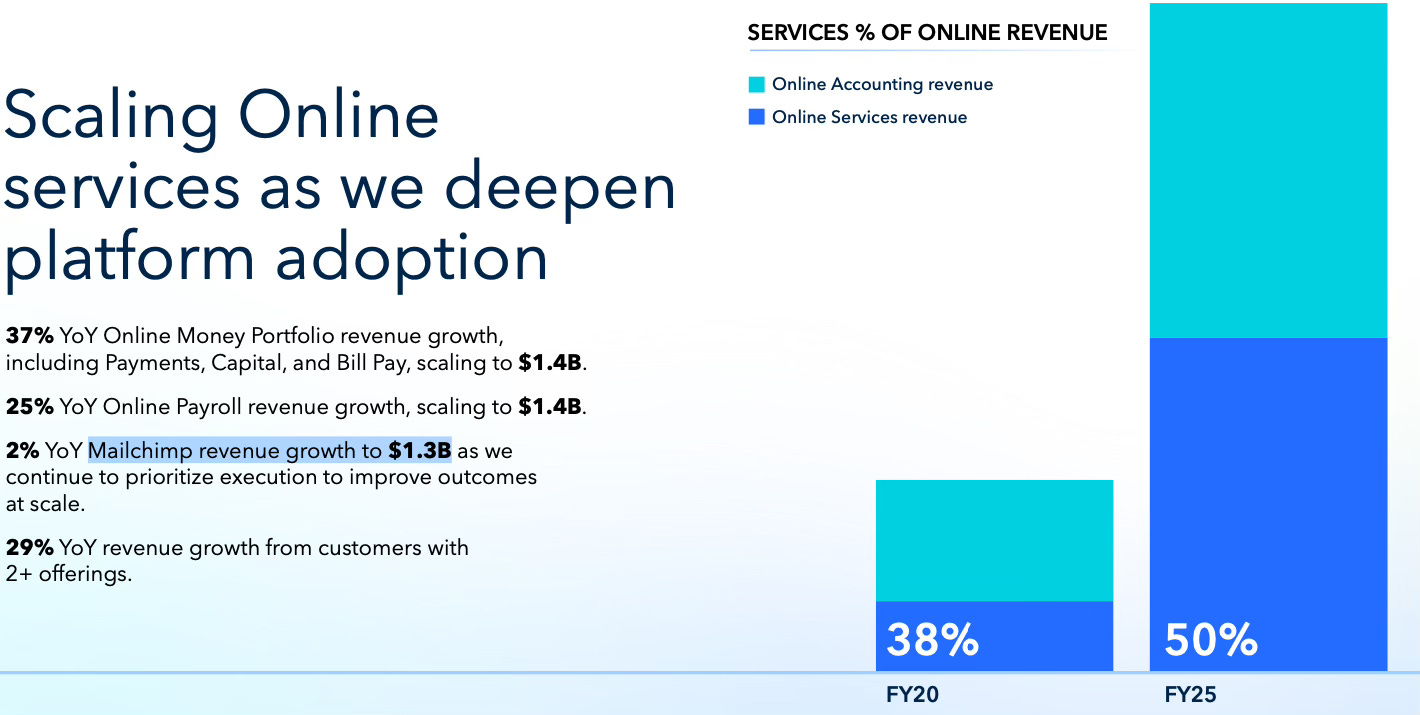
Mailchimp: Mailchimp was a costly acquisition and management historically buried its performance in the annual investor presentation, rather than the more important SEC filings. The recent decision to be more explicit on Mailchimp’s results shows Sasan Goodarzi, Intuit’s CEO, and the team are taking a more accountable stance with past capital allocation decisions. This culture will certainly reward shareholders over time.
Stock-based compensation treatment: One of my biggest frustrations with U.S. software companies was their exclusion of stock-based compensation from Non-GAAP earnings calculations. I addressed this issue during the Intuit deep dive (see page 74 of 80) and explained why I account for this in my own non-GAAP calculations.
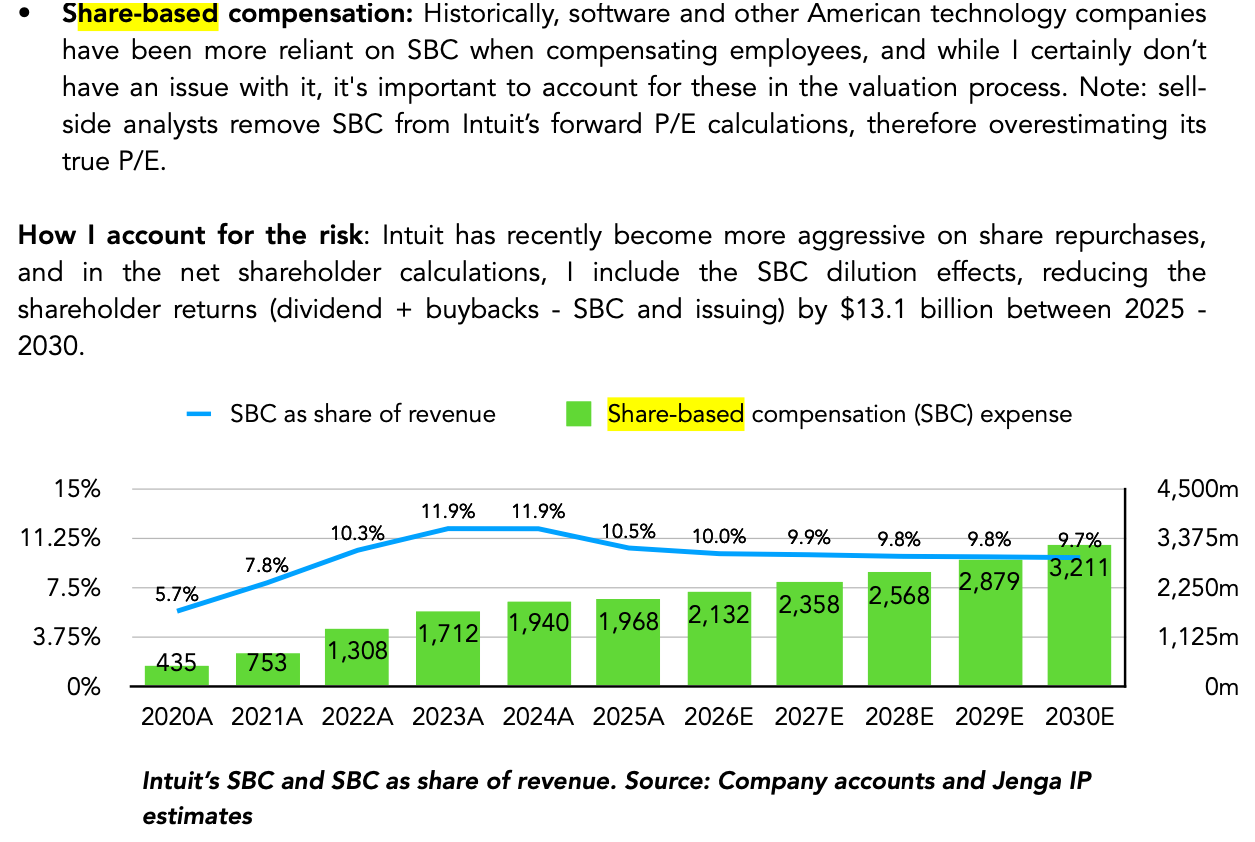
Intuit’s management confirmed it will now reverse its decision to exclude stock-based compensation, aligning better with all shareholders.
Growth ambitions: During my months-long research into Intuit, I was incredibly perplexed about why management thought 20% revenue growth was possible. I reckon they simply needed a justification for Intuit’s previously extremely rich valuations two years ago. Here are its CEO’s own words during the FY 2025 Investor Day.
“We want to be one of the most trusted companies in the world, and we aspire to 20% top line growth….The second and last thing I would touch on this page is Intuit grew 16% this past year. And internally, we believe 20% is possible. It’s our aspiration.” Sasan Goodarzi, FY 2025 Intuit Investor Day.
Investors who looked deeply into each of Intuit’s businesses would quickly conclude that 20% would be near-impossible to achieve, so its good management has now backtracked from this target to a more realistic growth range. Intuit doesn’t need to grow 20% to achieve a 20% IRR.
A recap of Intuit’s investment case
Earlier in June, I made Intuit an 8% position in the Jenga IP Global Equities portfolio and the investment case was predicated on:
Revenue: 11.9% 5-year CAGR
EBIT: 12.4% 5-year CAGR, with 2030 EBIT margins of 26.8%.
Net income: 12.7% 5-year CAGR
Shareholder returns: $25.9 billion net shareholder return between FY 2025 and 2030 (dividends and repurchases net of stock-based compensation).
Earnings multiple expansion: An exit multiple of 23x by FY 2030 supported by Intuit’s business quality and growth prospects.
Altogether, these points to a potential IRR of 20.3% from our purchase price of $84.9 billion market cap or $269.1 per share.
The important question I ask myself every quarter and fiscal year is: Is Intuit on track to achieve our investment target?
Let’s first dig into its 2026 results to answer this question.
2026 financial estimates versus actual
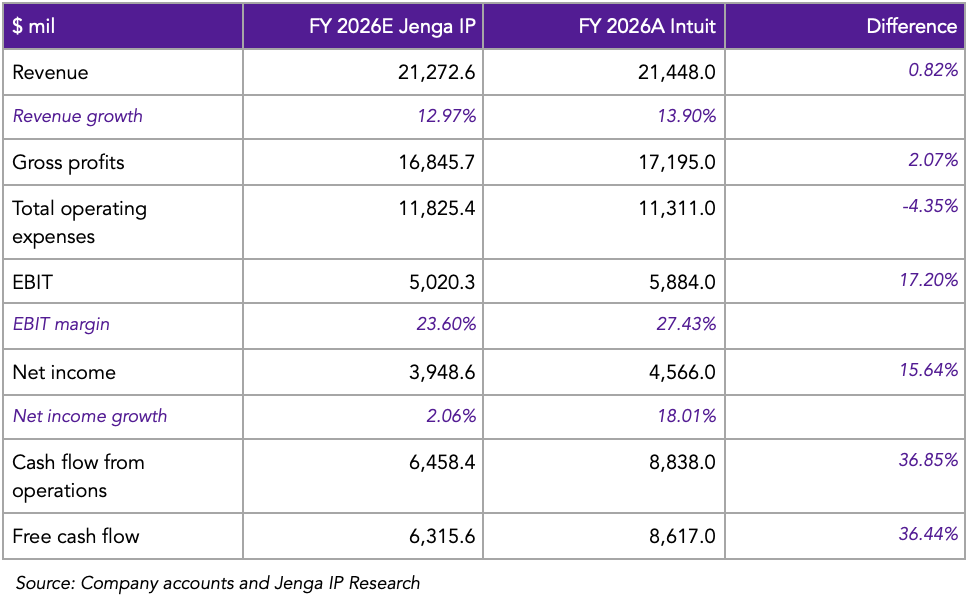
As shown in the table above, Intuit performed better than my estimates in every key financial metric, and while my revenue estimates were close, I overestimated every actual cost line performance:
2026 cost estimates versus actual
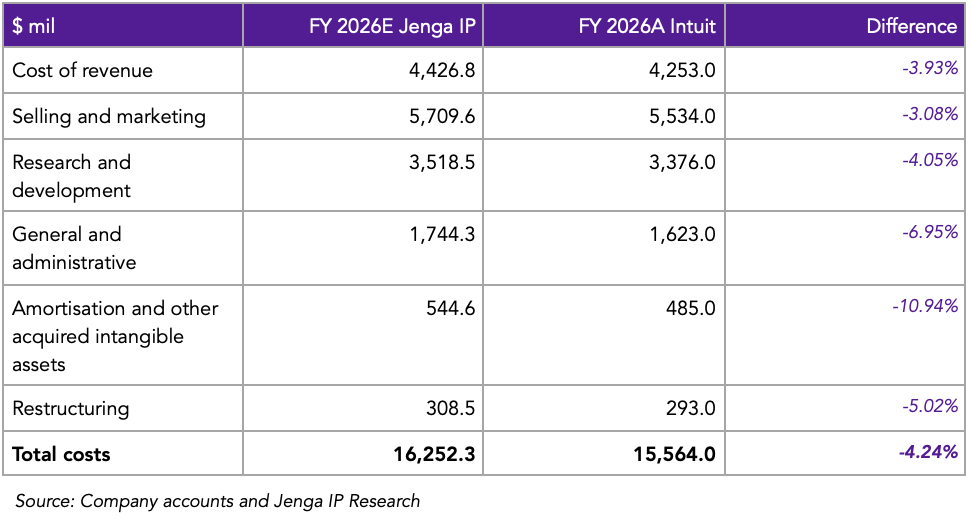
Even with the $293 million restructuring charge from the ongoing layoff of 17% of the workforce, Intuit still beat its own GAAP operating income guidance of $5.82 billion, and it’s impressive that we see such cost management even as it chases expensive AI ambitions across QuickBooks and the lower-margin TurboTax Live business.
I had included a margin of safety across all cost lines, but it’s evident that my cost pressure worries are overblown, especially when we look to the 2027 operating income guidance. More on this shortly, but let’s next dig even deeper into key Intuit KPIs to gain a better understanding of FY 2026.
Division revenue estimates versus actual performance
It’s important to look under the hood when assessing revenue growth, and for Intuit, there are three segments that particularly matter for the investment case: Online Accounting (QuickBooks), Online Services (Bill Pay, QuickBooks Payments & Capital, Payroll, and Mailchimp) and TurboTax.
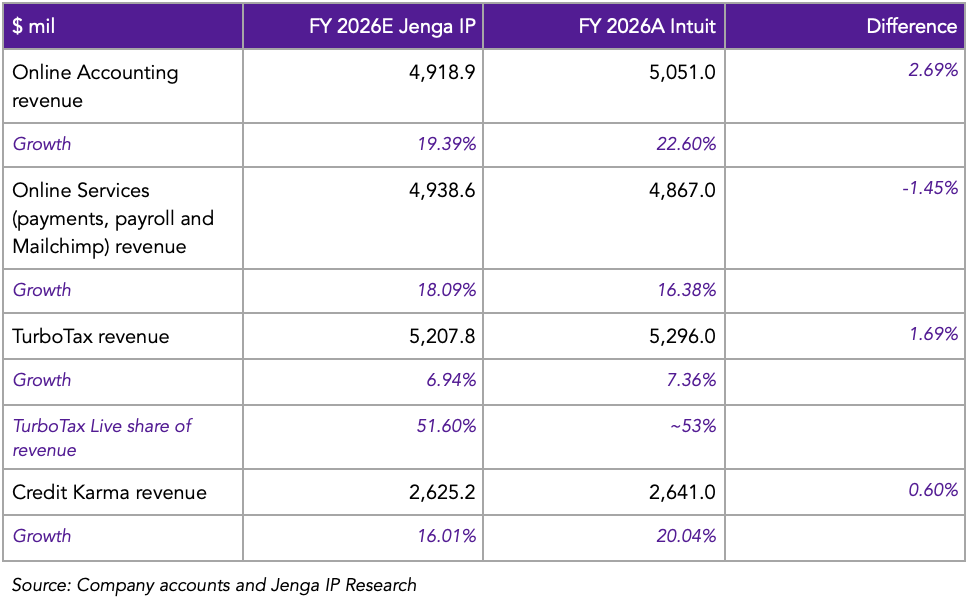
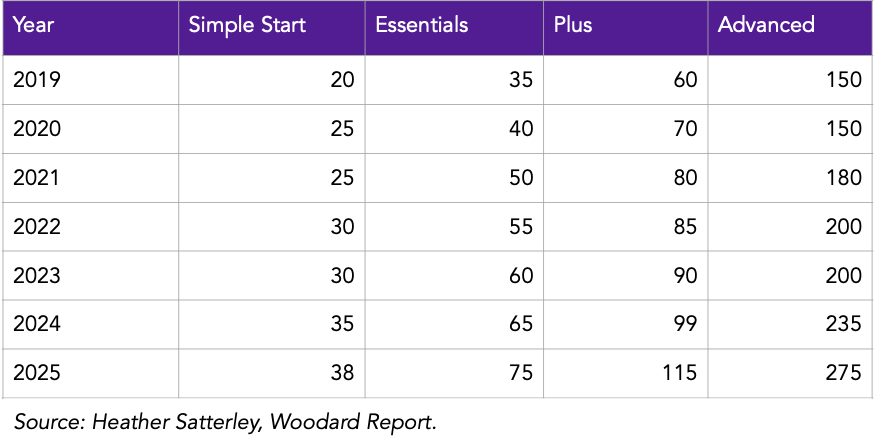
As you see from the table, QuickBooks Accounting was ahead of my estimates, and while we don’t have a complete perspective (more information will be provided during the FY 2026 Investor Presentation), a larger share of the 22.6% revenue growth was driven by pricing increases. As we discussed during the deep dive, Intuit raised prices by 15-17% in 2025 for its core QuickBooks plans (see table below).
Paying customers grew by only 3% to 8.9 million in FY 2026, below my own estimate of 9.2 million paying customers for FY 2026 (see page 67 of 80 in the Intuit deep dive).
In the future, price increases will play a smaller role in QuickBooks growth, and as management discussed, it will focus on using QuickBooks Free and Lite to grow its user base, with the hope that they convert into higher ARPU customers once they add Bill Pay and Payroll as their businesses scale during the earnings call.
“A key component of our new-to-the-franchise strategy is widening the front door with QuickBooks Free and QuickBooks Lite. These offerings create low-friction entry points to reach millions of businesses earlier in their journey and build a relationship with them from the start.” - Sasan Goodarzi, FQ4 2026, Intuit Earnings call.
The other core growth driver here is Intuit Enterprise Suite, its newer mid-market ERP and accounting solution for larger customers. Intuit reported the mid-market grew by an impressive 28%, with 3/4 of new customers coming from existing customers who either upgraded from QuickBooks Desktop or Advanced plans.
A large share of these customers are businesses in the American construction sector, and Intuit still have a lot to do to prove it can actually grow its mid-market solutions beyond them.
Online Services division growth came in slightly below my estimate. From the earnings call, we know QuickBooks Payments exceeded our own 26.5% volume growth to $220 billion:
“We are seeing strong evidence of this today with significant opportunity ahead. Businesses manage over $2.7 trillion in invoices through QuickBooks every year, and total online payment volume, including bill pay, grew 30% to more than $225 billion for the full year. And as customers grow with us, they adopt more of the platform.” Sasan Goodarzi, FQ4 2026, Intuit Earnings call.
However, little was said about Payroll, and from the overall picture, Payroll was the disappointment here, relative to my estimates. I will watch out for further commentary during the investor presentation next month.
Let’s next move to the main problem within Intuit, TurboTax.
TurboTax DIY issues
There’s no escaping the fact that TurboTax DIY is Intuit’s big problem amid increasingly more severe competition. Management hoped tying Credit Karma with TurboTax could curb customer losses and churn (Credit Karma customers represent a large share of the lower-income households), but its customers are increasingly becoming less loyal to tax filing software and shopping more and longer for the lowest-priced tax solution ahead of the tax season.
This means Intuit will likely have to spend even more on marketing, customer discounts and Credit Karma cross-selling to curb these TurboTax DIY losses.
Overall, 2026 was quite good for Intuit, and the next question is how does management view performance for 2027?
2027 estimates versus management guidance
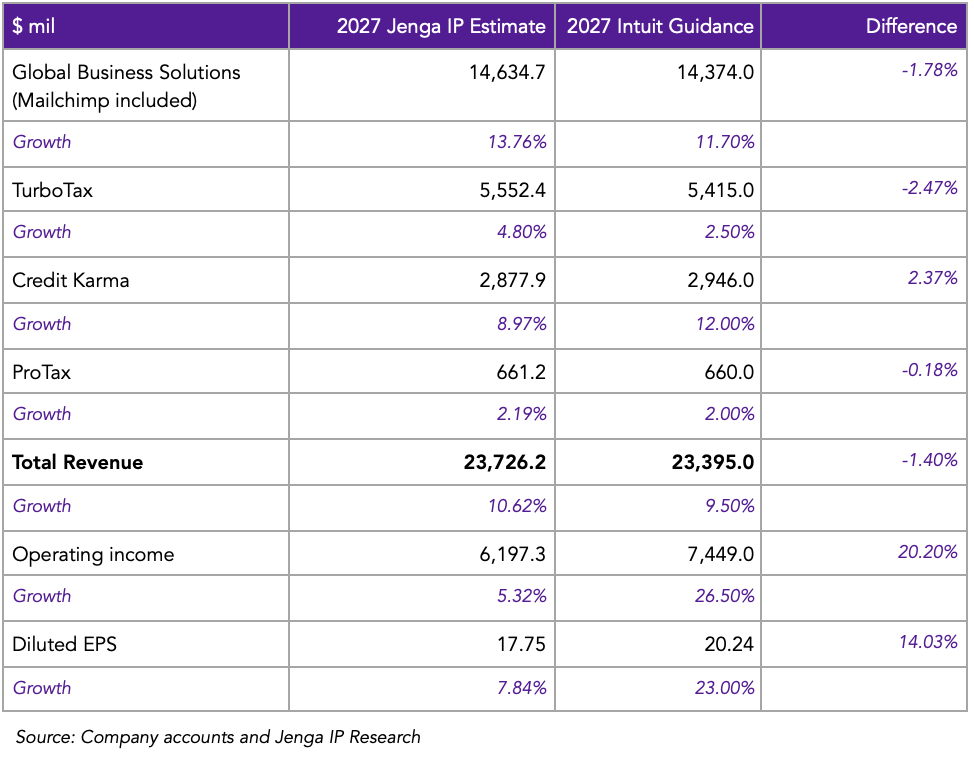
At first glance, the 2027 guidance might seem like a cause for concern, but once we factor in the addition of stock-based compensation to non-GAAP calculations, Intuit’s 2027E net earnings per share growth of 23% is very attractive and even exceeds my 2028E diluted EPS estimate of $20.09, while 2027E GAAP operating income guidance similarly exceeds my 2027E and 2028E, nearly approaching my 2029E modelled EBIT of $7,766.7 million.
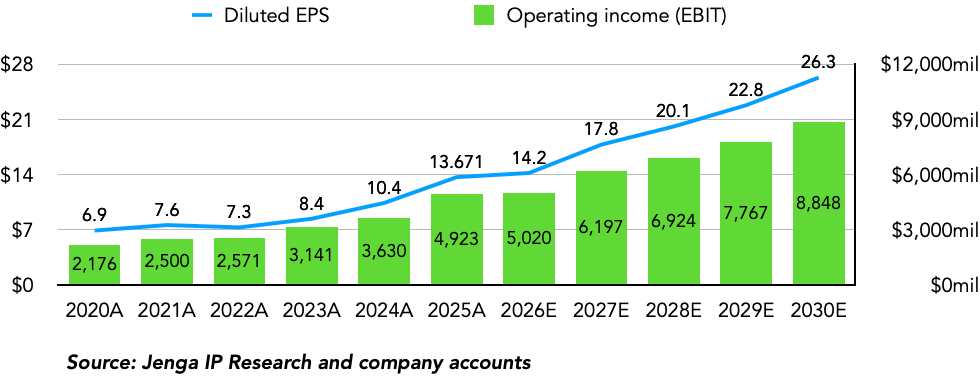
When I compare management’s mid-point guidance for FY 2027 with my own 2027 estimates, the challenges lay in Global Business Solutions and TurboTax’s slower than anticipated revenue growth.
While I’m generally more focused on free cash flow and earnings growth, revenue shortcomings are also important for any long-term investment case. The difference between my total revenue estimate and management’s is $331 million, a 1.4% difference, and while I don’t think this is a big enough gap for a structural worry, I’m aware revenue shortcomings should certainly be paid attention to.
For coming quarters, I will be watching QuickBooks paying user growth (can it return to a >5% grower?) and TurboTax DIY (can overall TurboTax return to a 4% growth rate?), particularly in FQ3 2027.
Conclusion and final thoughts
The key worry for Intuit is whether AI replaces both QuickBooks and TurboTax.
For QuickBooks, Intuit’s results show users still see value in its platform. Not many legacy software companies can grow users by 3% after raising prices by 17% in a year. Secondly, payments’ 30% volume growth proves Intuit’s strategy of “beyond just bookkeeping” is taking shape and will materially drive revenue per user over time.
For TurboTax, I remain watchful on its DIY defensiveness to both cheaper alternatives and AI empowering the competition more than Intuit.
For now, the overall picture still looks very healthy despite the market reaction, and I remain long Intuit and still believe it could match our 20% IRR target over the next 5 years.
Paid readers can access our initial Intuit valuation model below the paywall.
This was very helpful - thanks
When earnings results are good whilst the stock price is marked down, I tend to want to pay a closer attention behind the Balance Sheet figures ! Quality of assets, level of borrowings, interest charges, etc !
Usually there are hidden points spooking the market.