

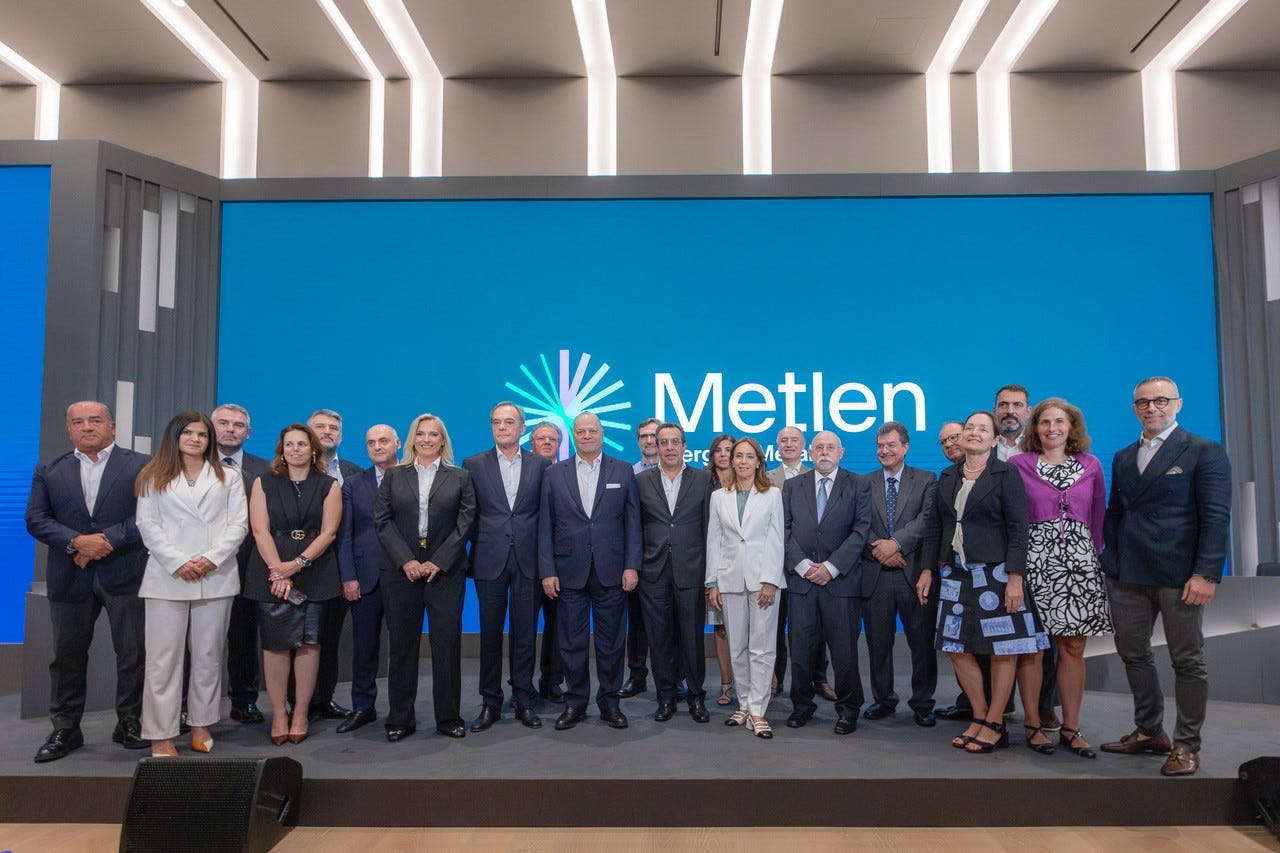
Late last year, I was invited to speak at the 4th Ben Graham Value Investing Conference in Athens. Whenever I travel for an event, I make it a point to meet a few local companies, partly to understand the business climate, and admittedly, to justify the airfare.
Most of these visits are informational. I pick up some industry knowledge, put faces to names, but rarely find companies I'd eventually invest in. Athens was different. Of the six companies I met, all caught my investment interest. For months, I debated on which companies deserved a spot in the portfolio and initially concluded that all six were worthy, adopting a basket approach. I call this the “all-you-can-eat investing approach”.
Nearly a year later, after conducting further research, I've concluded that one of these six companies stands out from the rest: Metlen Energy and Metals.
Metlen, founded as Mytilineos Group in 1908, is an industrial conglomerate operating mainly in the aluminium, power, and electricity markets, which are not typically the focus of growth compounders.
However, since going public in 1995, Metlen has grown its share price by 38-fold, delivering a 13% annual return, consistently stayed operating and net profits positive each year, and has never missed a dividend payment. More impressively, its earnings growth since commencing its transition beyond just commodity trading at the start of the century has grown 41-fold, an 18% compounded earnings growth over 24 years.
There are numerous reasons to overlook investing in industrial conglomerates, with countless case studies demonstrating that they have destroyed shareholder value over the long term, collectively leading to the "conglomerate discount" terminology.
However, as I'll explain in this deep dive, Metlen’s approach to business and capital allocation sets it apart from typical industrial conglomerates. Its acquisitions and expansionary projects are well thought out, long-term in nature and often lead to synergistic value creation by reducing costs across its existing businesses.
Key Metlen stats (6 August 2025)
Market cap: €6.62 billion (€47.8/ share)
Jenga IP 2029 est. market cap: €13.9 billion (€99/share)
Potential IRR (incl. dividends): 21.2%
Jenga IP Quality rating: 70.2/100 (moderate moat)
Over the next five years, Metlen could be a triple dip: (1) good track record of profitability, (2) earnings growth, and (3) become more known to investors with its relisting in the UK. Overall, I see a potential for a 21.2% IRR and have now transitioned them into a top ten member of the Jenga IP portfolio. In this article, I’ll discuss its path by covering:
Metlen’s history: Its transition from trading to manufacturing, a timeline of key events, an overview of its current businesses, strategy, and management.
The Greek Economy: An overview of the Greek economy post its debt crisis, regulatory changes in its energy and gas markets, and how these have impacted Metlen.
Industrial conglomerates: Analysis of industrial conglomerates, their moats, and where Metlen stands relative to emerging market peers.
Aluminium: Analysis of its alumina and aluminium divisions, cost drivers, recent investments such as its Rio Tinto partnership, growth trajectory, and a review of its investments in gallium and circular metals recovery and processing.
Power and Energy: Analysis of its power, natural gas, renewable energy (RES) asset rotation model, and electricity divisions, including cost drivers, growth prospects, and key unit economics for its new 826 MW thermal plant within its Agios Nikolaos complex.
Risk and challenges: Assessment of key risks such as commodity sensitivity, lack of pricing power, geopolitical and private-public partnerships, and electricity churn rates.
Valuation: A detailed spreadsheet analysis of its earnings and cash flow projections over the next five years and thoughts on its transition to an LSE listing.
1. Metlen’s History
Depending on who you ask and when you first came across Metlen, you either identify the group as:
Mytilineos - Trading Group: 1990 - 2004
Mytilineos Holdings - Metals to Energy 2004 - 2014
Mytilineos Group - Integrated Utility: 2014 - 2024
Metlen Energy and Metals PLC: 2024 - date
Like many industrial conglomerates, Metlen has undergone several operational transitions, acquisitions, and integrations, which at first glance present a complex picture and business model. However, at its core, it's simply an opportunistic industrial group. To understand where Metlen is going and its potential for future growth, it's essential to review its past.
Mytilineos Trading Group 1990 - 2004
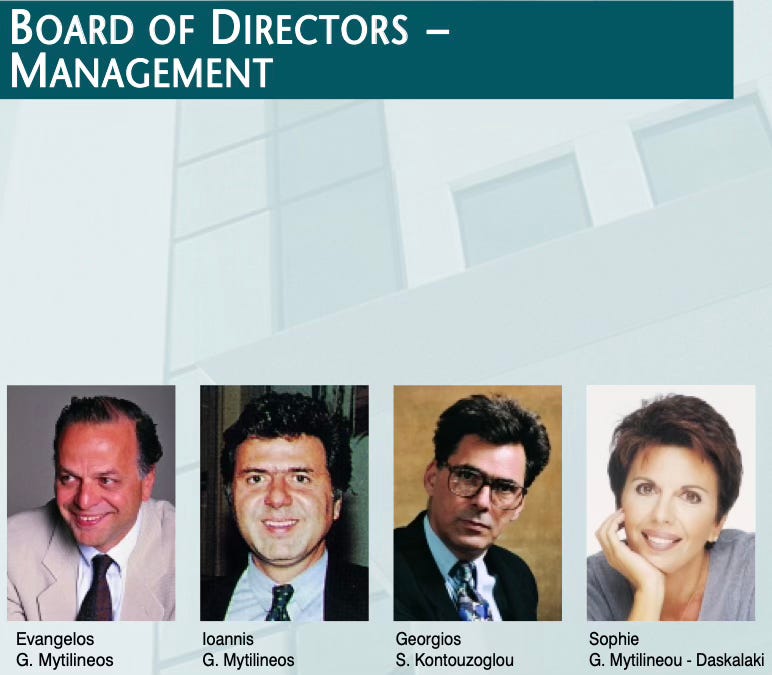
While Metlen's history dates back to 1908, its modern consolidated form was established in 1990 by Evangelos Mytilineos, the current CEO, who had worked in the family business for 12 years, and created the group as a holding company. Evangelos is a third-generation member of the Mytilineos family and inherited the business from his father, Georgios Mytilineos.
Alongside his siblings, Ioannis and Sofia, who were also Metlen board members until the late 2010s, Evangelos underwent an acquisitive spree diversifying Metlen beyond its then most important trading segment, steel products, into other trading areas, ranging from copper, zinc, lead and aluminium.
Commodity trading is a common avenue for industrial entrepreneurs to scale their businesses and connect with global markets. It's asset-lighter than direct manufacturing, with less financial and Capex requirements and a quicker way to build relationships with the industrial supply chain. Evangelos capitalised on this and focused the group's relationships and sales in countries such as Romania, Serbia, Cyprus, and Italy.
The 1990s were a period when the Balkan region opened up to private and foreign capital, and Metlen, with its technical know-how, took advantage of this and invested in some key assets:
METKA: In 1998, Metlen acquired an initial 27.54% controlling stake through a hostile takeover of METKA (Metals Constructions of Greece), a construction company founded in 1962 with several Engineering, Procurement, and Construction (EPC) projects for the state-owned Public Power Corporation (PPC). METKA introduced the Metlen group to the power industry, and its construction arm later developed several thermal hydroelectric power plants and wind and solar parks in the 2000s.
Sometra: In 1998, Sometra, the Romanian sulphurous minerals plant, was privatised (nationalised in 1948), and Metlen acquired an initial 57% stake in the company, opening the group’s scope into the potential of mining.
With both assets coupled with its existing metals trading operations, Metlen entered a new stage as a vertically integrated group; however, its stability and business resilience were not yet robust. Between its listing in 1995 and 2000, Metlen's revenues grew sevenfold. However, in the following four years (2000-2004), its revenues declined by a third, while its net profits fell by 58% during the same period.
Commodity trading revenue and profits are lumpy, and Metlen was exposed to the market slump during this period, particularly in its international trading activities. While its industrial activities grew during the period, its international trading division declined by 70%. Metlen responded by increasing its efforts in manufacturing businesses, with the acquisition of Aluminium of Greece.
Mytilineos Holding 2004 - 2014 - Metals to Energy
Like METKA, Aluminium of Greece was a listed company, then controlled by Aluminium of Canada (now owned by Rio Tinto) and one of the largest aluminium companies operating in Europe. Like many Greek listed assets, its market cap had declined by 70% between 2000 and 2004, and Alcan proceeded to sell its 60% controlling stake to Metlen at the start of 2005.
Aluminium was a commodity with which Metlen was well experienced through its trading arm, but acquiring and operating Aluminium of Greece was a new territory for the group, given its scale. Both companies had a similar market capitalisation of €260 million at the time of the acquisition.
The acquisition was immediately accretive for Metlen and fuelled further capital for acquisitions and diversification efforts into the renewables and natural gas markets.
By 2009, Metlen began building its natural gas power plants:
Combined Heat & Power (CHP) Plant Viotia, a 334 MW plant in the Agios Nikolaos Energy Complex, to support its aluminium plants.
Combined Cycle Natural Gas-Fired Plant (CCGT) Korinthos, a 396 MW (now 436 MW) plant in a joint venture with Motor Oil (M&M Gas).
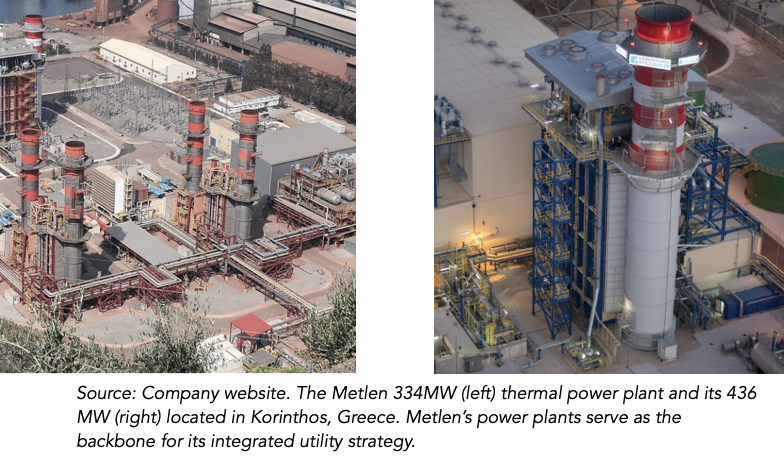
While these power plant projects broadened the revenue model scope for Metlen, the key factor behind its energy investments was that Metlen's metallurgy plants required a significant amount of energy. By building and controlling its own energy source, Metlen further reduced the operational costs, leading to synergies across both segments.
The deregulation of LNG importation, a monopoly held by DEPA S.A., made the investment case for power plants further attractive as Metlen could now source its own natural gas from international companies like Gazprom.
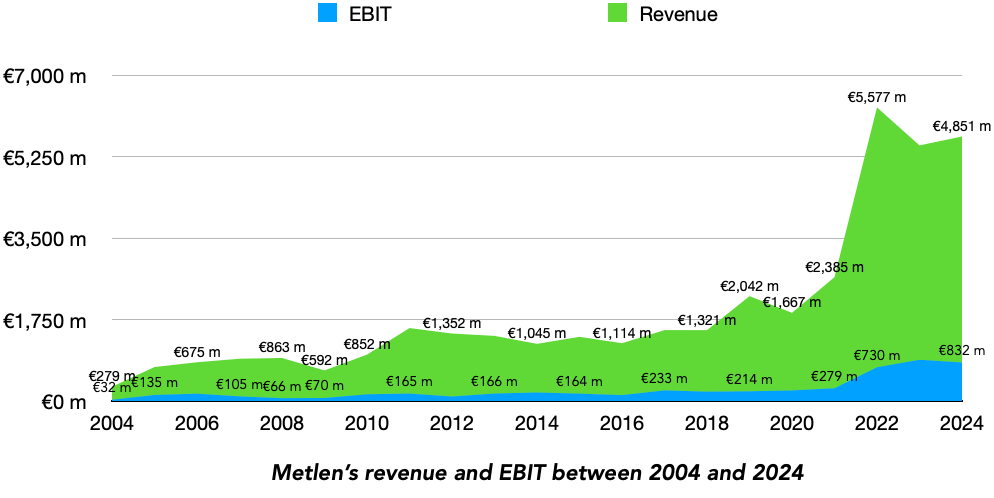
Overall, during the ten years between 2004 and 2014, Metlen grew its revenue by 14.8% compounded growth, while its operating profits rose by 19.3% compounded growth.
Mytilineos Group 2014 - 2024
With operations spanning trading, gas production, aluminium mining, construction, electricity distribution, and renewable energy, Metlen consolidated its divisions and transitioned to its current structure: an integrated industrial conglomerate. At the core were aluminium and natural gas, and Metlen’s further acquisitions became more focused on vertically integrating both divisions:
Protergia: With control of its natural gas division, Metlen was in a better position to enter the electricity distribution market, as PPC no longer had a monopoly on the retail market. Under its Protergia brand, Metlen expanded into the electricity and gas retail market in 2014 and later acquired companies such as WATT+VOLT in the utility services sector.
Bauxite and alumina sourcing: Investments in its Delphi Distomon arm and the European Bauxite acquisition to gain further access to bauxite, a key raw material required in the aluminium manufacturing process.

On their own, each segment doesn’t seem that exceptional. These are commodities with a market price that Metlen must follow, and Metlen wasn’t a European market leader or had much influence at the global level. However, the value creation was in the integration:
Control energy input -> lower costs in metals production
Higher metals margins -> reinvestments into energy assets
Renewable and retail growth -> stable cash flows and natural hedges for the industrial and trading arm
Repeat the process
This process creates a virtuous feedback loop, compounding value across the group. The integrated model proved exceptionally resilient in 2022, when Russia's invasion of Ukraine sent European natural gas prices soaring. While many of its industrial peers suffered from margin compression, Metlen's control of its own energy supply and diversified revenue stream enabled it to weather the volatility and invest in both its energy and metallurgy businesses.
The gas price increase alone led to a revenue increase of €2.7 billion, surpassing the group's total revenue in 2021. Meanwhile, its natural gas supply division's EBITDA increased tenfold, from €12.5 million to €121 million. With these additional profits, Metlen continued to diversify and invest in the renewable energy space (M renewables division) through its asset rotation strategy, both in Greece and internationally.
Today, the M renewable division represents 21% of the group's total revenue, from 11% two years ago in 2022.
2023 also marked the first year Metlen generated more revenue from its international operations (51.1% of 2023 revenue), and marked the transition to its current form, Metlen Energy & Metals PLC, a UK-listed company with global operations.
Before diving further into its operations, it's essential to reflect on two key factors that played significant roles in Metlen's structure: its conglomerate structure and the Greek Economy.
2. The Greek Economy