

Last April, I explored listed airports and made the case for two Mexican airport groups:
OMA, a domestic concessionaire of the Monterrey airport (46% of its revenue) and 12 other Mexican airports in the North Central region of Mexico.
ASUR, the concessionaire of Cancún’s airport (57% of revenue), 8 other Mexican airports and a few other Latin American airports, including Puerto Rico and Colombia, and more recently added, Brazil, Costa Rica, Curaçao and Ecuador.
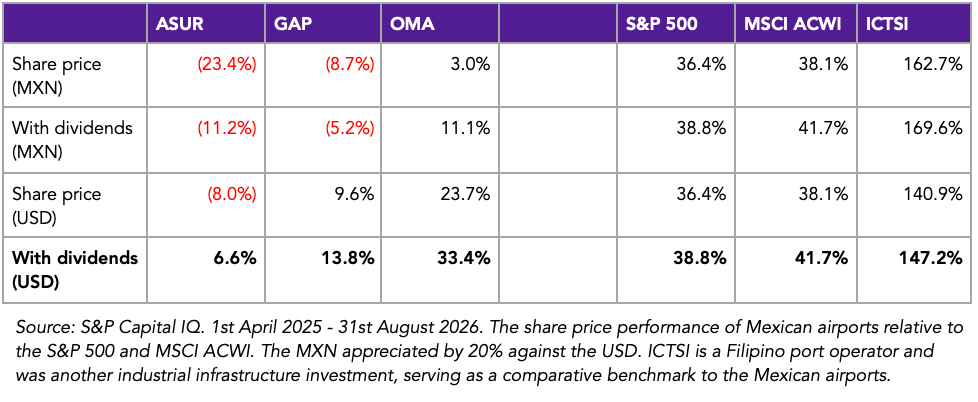
While the total return in dollar terms is positive since the investment 17 months ago, all three are well below the benchmarks, with ASUR performing the worst, returning just 6.6% versus the MSCI ACWI Index return of 41.7%.
Beyond the ongoing Middle East tension impact on global travel, there are a few other ongoing issues in the Mexican airport industry and the purpose of this article is to review how these issues might impact their earnings and free cash flow forecasts over the next five years, update our conclusions on their valuations and determine if we maintain (12-15% IRR), reduce (6-12% IRR) or exit (<6% IRR) the Mexican airports investment.
I had previously left out GAP, the largest Mexican airport group with 12 Mexican airports led by the Guadalajara Airport (25% of revenue) and two airports in Jamaica, from the initial Mexican airport investment case due to valuations, but with its recent share price decline, GAP now trades at valuations worth researching, and I include a detailed GAP valuation model in the article below.
Here’s a table detailing the key takeaways from the Mexican airports updated research.
Table of contents
The Mexican airport challenges: Analysis of key issues such as the Middle East tensions, MXN strength, ongoing Pratt & Whitney engine challenges and the potential Viva and Volaris merger.
Recent airport developments: Internationalisation of TAA, acquisitions at ASUR and GAP and the general state of Mexican airport passenger traffic.
GAP’s analysis and valuation: Passenger growth, ARPU, non-aeronautical revenue potential, integration of CBX and valuation model.
ASUR’s analysis and valuation: Passenger growth and ARPU, earnings impact of ASUR US Commercial and Motiva’s airport portfolio, debt levels, changes to the exit P/E multiple and valuation model.
OMA’s analysis and valuation: Monterrey’s passenger growth drivers in focus, ARPU across all airports, earnings potential and valuation model.
Portfolio allocation: Jenga IP’s exposure to Mexican airports and balancing contrasting risks and benefits.
1. The Mexican airport challenges
Why airports?
As a business model, airports generally meet what I look for in investable businesses. They are highly profitable (>30% EBIT margins), natural monopolies with high barriers to entry and benefit from global growth in tourism and business travel. Airports aren’t flawless, though. Their dependence on passenger volumes means they are still exposed to cyclical economic shocks, and there’s a limit to their value chain control due to regulatory and concession risks, and dependence on travel demand for locations served.
Why Mexican airports?
The best airports are those located in countries with growing GDP’s and populations, a strong tourism economy and a high diaspora population in nearby countries. Alongside Turkey and Thailand, Mexico is one of the few economies that fit this description, and the Mexican airports have the additional benefit of lower concession fees with good non-aeronautical opportunities through bonded warehouses (OMA), cross-border bridges (GAP) and duty-free and retail revenue growth (ASUR). As early movers in airport privatisation, they’ve also managed to acquire airport concessions in nearby countries, supporting their growth potential (ASUR and OMA).
With dividends included, an equally weighted portfolio of the three airports has compounded by 878% (USD terms) over the past 20 years, a 12.1% CAGR, versus the S&P 500’s return of 600% (10.2% CAGR) during the same period, while trading at one of their lowest valuations since going public today, 12x forward earnings.
It’s been far from smooth sailing for these three companies, and arguably, the current climate is one of the most challenging periods for them outside the financial crisis in 2008 and the global pandemic.
Before diving into each airport group, let’s first explore the overall industry challenges:
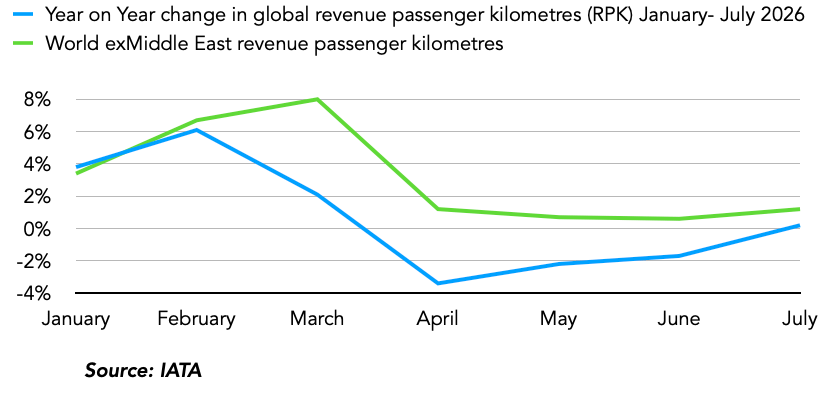
Middle East tensions: Airport revenue is directly tied to passenger volumes, so any factor impacting travel volumes impacts them. The Middle East tensions had an immediate impact on global travel as disruptions hit airlines around the world. The second-order impact was jet fuel prices, which nearly doubled by March, increasing the costs for air travel and leading to a few planes being grounded on routes that were unprofitable.
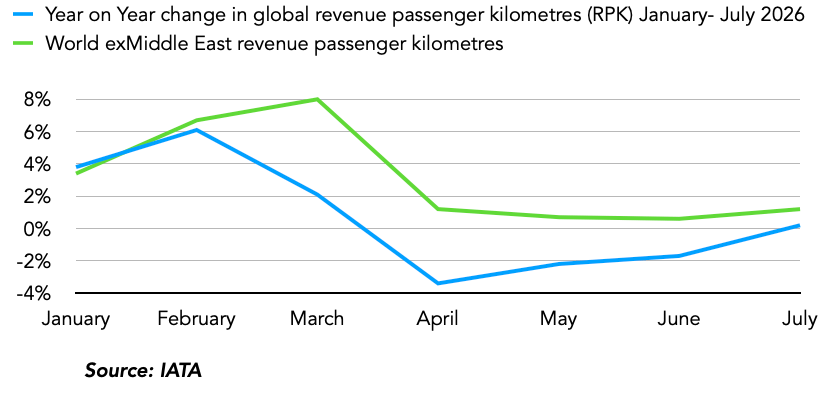
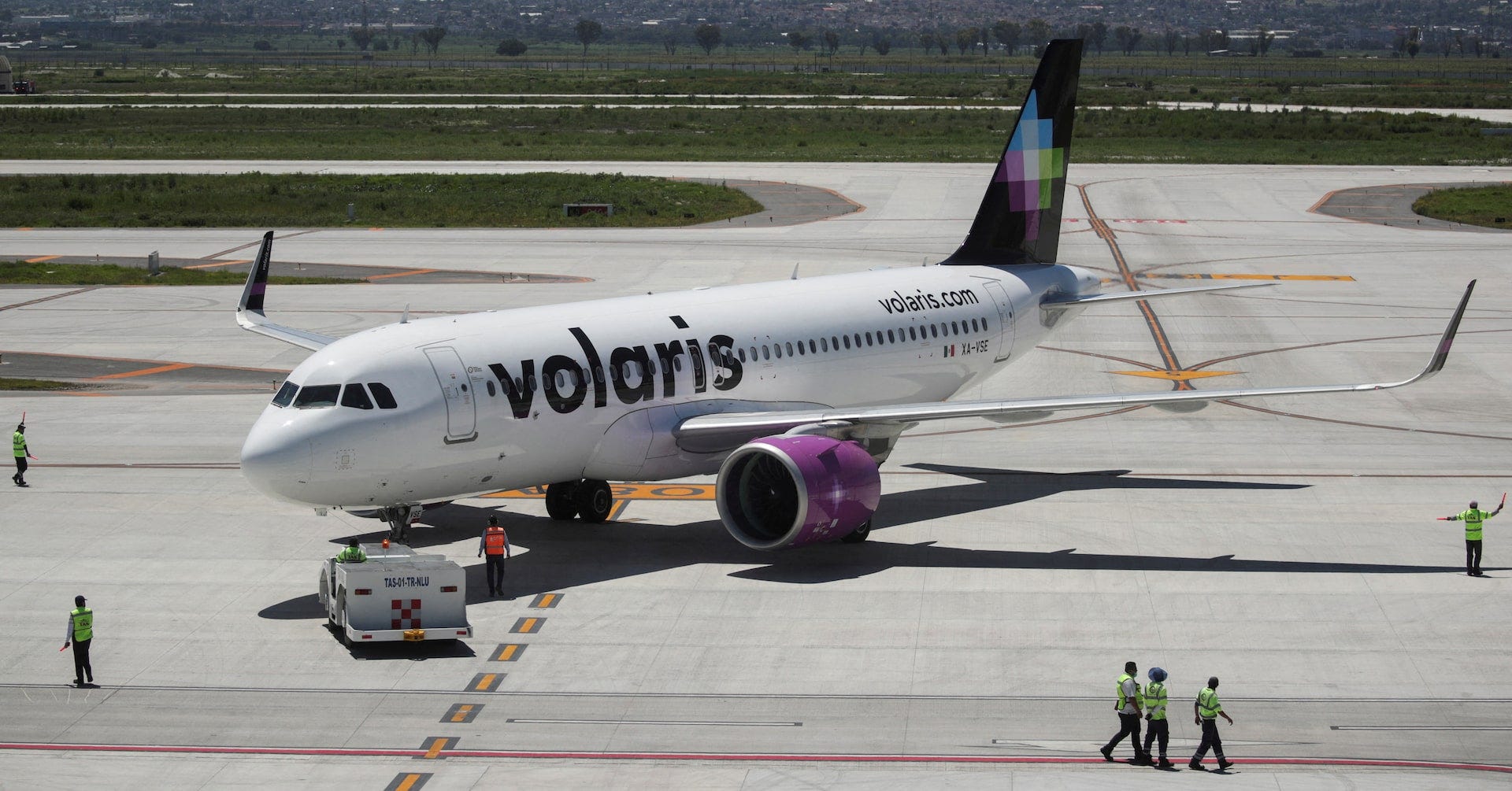
In Mexico, Volaris, the second market leader, had cut flights by 9% in May due to higher jet fuel prices, while Viva and Aeroméxico, the other two airlines in Mexico’s oligopolistic airline industry, cut domestic flights by 1 and 3%, while prioritising more on international flights. Latin American travel has so far remained more resilient than other parts of the world, so this alone doesn’t explain the ongoing challenges.
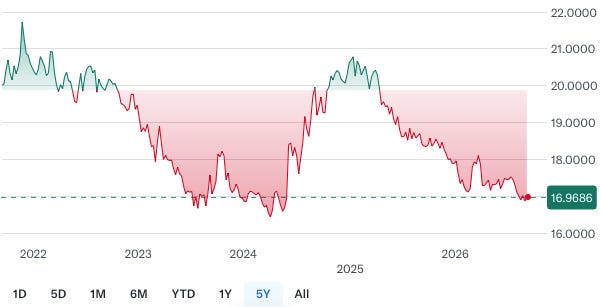
Mexican peso strength: Airports earn international passenger charges in USD, and these international passengers also spend in USD at duty-free and restaurants, which means a stronger USD boosts their MXN earnings. The recent broader USD weakness, coupled with foreign speculation on Mexican interest rates and carry trades, has increased the MXN value against the USD, reversing losses from 2024.
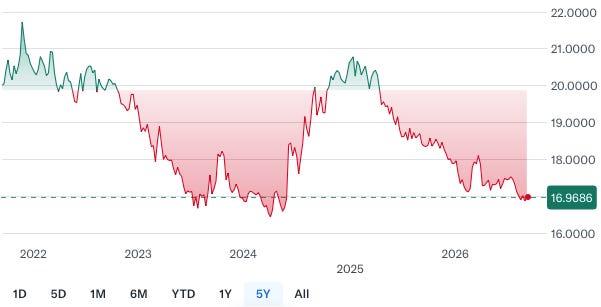
MXN relative to the USD When these periods of heightened MXN strength occur, it also becomes more expensive for foreign tourists. Americans make up more than 60% of all tourists in Mexico, and given the higher Mexican prices, many have looked to alternatives such as the Dominican Republic for the summer holiday (more on this shortly). Among the three airport groups, ASUR, the parent of Cancún’s airport, is the most exposed to this and has seen passengers decline by 6% this year. GAP (Guadalajara) and OMA (Monterrey) have also experienced some weakness in non-aeronautical spending per departing international passenger, further highlighting the currency strength impact.
Failed World Cup expectations: Economists and sell-side analysts expected Mexico’s participation as the Men’s Football World Cup co-host to boost the Mexican economy, luring more tourists, travel activity and supporting the local economy. However, the impact from the World Cup was very limited to just Monterrey (OMA) and Mexico City. In fact, many tourist hotspots like Puerto Vallarta (-6% June passenger decline), Los Cabos (-1.9% June passenger decline) and Cancún (-11.5% June passenger decline) saw passenger declines, with some directly attributable to the World Cup, as potential tourists went to other destinations during the summer period.
“We had a romantic idea that we [Cancún] could become the hub of the World Cup. That’s how we worked, that’s how the actions and intentions were made.” - Rodrigo de la Peña, President of the Cancun Hotel Association.
Today, a few analysts have updated their models, now suggesting a sharp bounce back for the 2027 summer, and as I will discuss in our analysis for ASUR, I fear this is wrong.
Pratt & Whitney engine issues: Mexican airlines, particularly Volaris and Viva, which together represent 57% of the Mexican aircraft fleet, are among the worst-hit airlines from the Pratt & Whitney engine issues, present in many Airbus A319, A320, and A321neo aircraft. At the start of last quarter, both airlines had a combined 21%, 56 of 264 planes currently grounded, with Viva particularly impacting OMA due to the Monterrey flight routes and Volaris more exposed to GAP’s airports like Tijuana and Puerto Vallarta.
The Viva and Volaris merger: The proposed merger between both airlines will have positive and negative effects for the airports. For flight routes they currently both serve, we will likely see route optimisation in the long term, with less frequency when compared to their current state, leading to lower landing and parking charges for the airports. For passenger growth, though, the most important revenue variable for airports, management argues, and I suspect the larger economies of scale gained from parts sourcing could lead to slightly better prices for customers, thus increasing access for Mexicans, which in turn boosts passenger growth and fees for airports.
Of these five, the Middle East tensions and Pratt & Whitney engines are temporary supply shocks which should lessen in impact over time, while I also suspect the World Cup disruption to tourist locations and MXN strength are temporary demand-side shocks for the airports. The true long-term challenge here is the Viva and Volaris merger, and the fact that this issue could turn out to be a positive factor for the airports keeps me optimistic there could be some light at the end of the tunnel for the airports.
Next, let’s look into each of the three airport groups, discussing the growth drivers, individual challenges and how I currently view their valuation and potential shareholder return.
2. Recent developments
A few factors have changed since my initial deep dive into Mexican airports that require a fresh perspective on their prospects and valuations.
I. Technical assistance agreement (TAA): At the time of their privatisation in 1998, Mexican airports needed technical partners to support operations and Capex plans. They created a separate share class for these partners and also paid them a fee, between 2.5% and 5% of operating profits per year. Over time, current controlling shareholders like Fernando Chico Pardo of ASUR and Laura Díez-Barroso Azcárraga of GAP acquired shares in the TAA partners, ITA and AMP respectively, meaning that minority shareholders were also paying the majority shareholder for technical assistance.
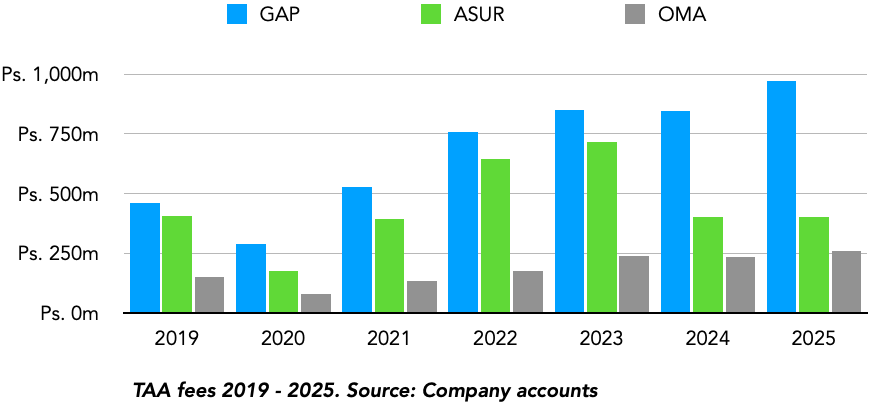
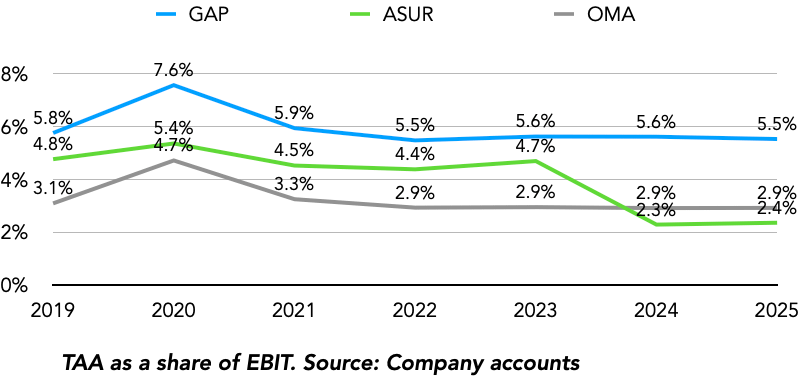
For the initial years, this arrangement made sense, but today, these airports are international players themselves, have the expertise and no longer need support to plan and execute Capex programs, and to terminate this arrangement, both ASUR (2.4% dilution) and GAP (3.2% dilution) issued shares to acquire the TAA and, in return, will not pay any more TAA fees going forward. I have reflected these in the updated valuation model, as this reduces the cost base and increases profit margins for both airport groups.
OMA hasn’t yet announced a similar deal and still pays the TAA fee to Vinci, but I suspect they will follow suit in the coming quarters.
II. Acquisitions: Although airports are generally the least acquisitive of the various transport infrastructure groups, 2026 has been the most acquisitive since inception for Mexican airports, with GAP acquiring the remaining 25% it didn’t own of CBX (Cross Border Xpress), the cross-border bridge that links the Tijuana airport (12% of GAP revenue) with the U.S. border, while ASUR closed the acquisitions of URW Airports, now called ASUR Airports, an American concessionaire of non-aeronautical and retail operations at terminals in Los Angeles aiport (LAX), Chicago O’Hare, and JFK airports, and Motiva’s airport assets, a concessionaire of 17 airports in Brazil, and 1 in Ecuador, Costa Rica and Curaçao.
There’s a lot of detail to explore in these acquisitions, but for investors, the most important question is how attractive they are and what the potential net earnings impact these acquisitions will contribute to the companies.
GAP’s acquisition of CBX
GAP’s CBX asset is the most attractive of the three acquisitions for three main reasons. First, CBX is a highly profitable asset with EBITDA margins estimated at 65% and strong conversion to free cash flow. Second, while CBX has alternatives for travellers between the Mexican border and the U.S., it’s the lowest-cost travel solution.
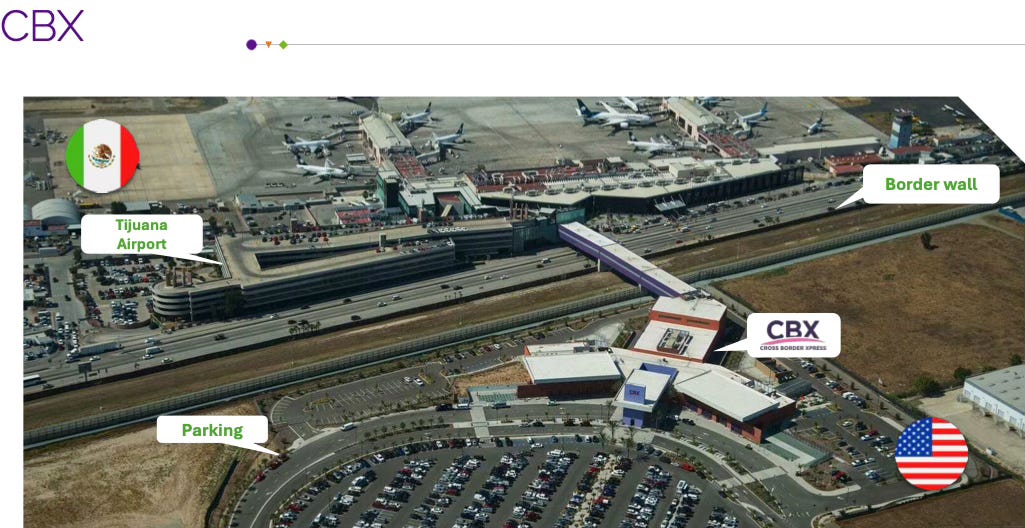
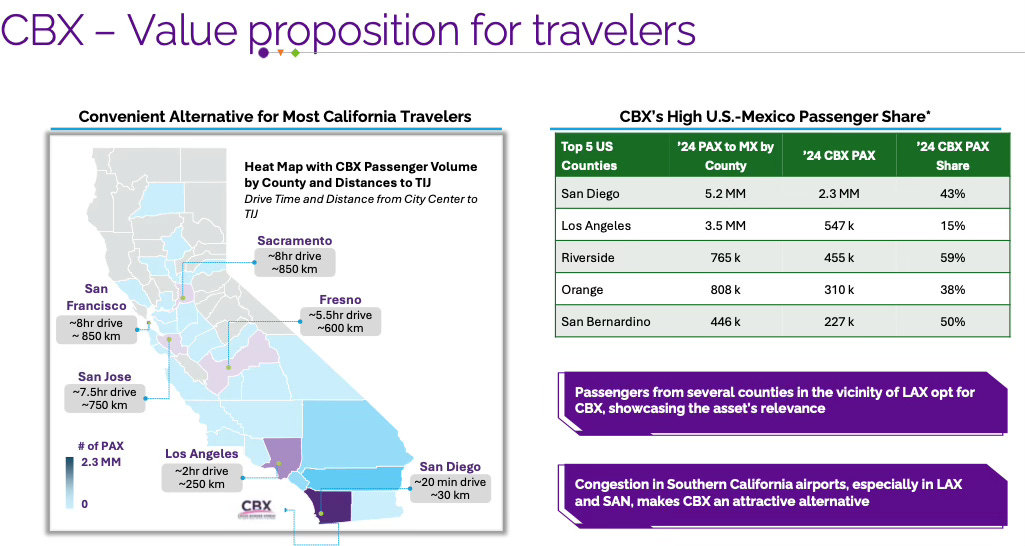
American travellers to Los Cabos, Mexico, from California would find it cheaper to travel from CBX into Tijuana (US$165 round-trip price) than to fly directly from LAX (US$342, 3-hour drive from CBX) or San Diego airport ($342, 30-minute drive from CBX). As a result, since 2015, CBX has steadily taken share from other Californian airports, most particularly San Diego; 58% of its 4 million passengers came directly from San Diego, and I believe this has further room for growth.
Finally, CBX is a fully USD asset, and while MXN exposure is more lucrative for investors today, it will come in handy during periods of MXN depreciation.
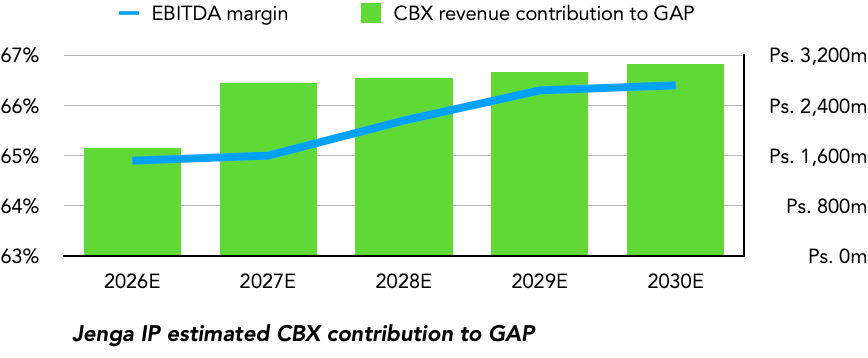
Overall, I believe CBX can contribute Ps. 3.05 billion in additional revenue for GAP, a very conservative 3.5% revenue CAGR between 2027 and 2030, while maintaining its 65% EBITDA margins, and I factor this into the valuation model. Also important for GAP is how this shapes the revenue potential for its Tijuana airport.
ASUR’s Motiva airports and URW acquisitions
Although sell-side analysts are yet to reflect the addition of both acquisitions in their models, I have reflected both in our ASUR model, and there are some key points worth discussing.
Motiva’s acquisition
For some background, Motiva, previously called CCR Group, is the largest listed transport infrastructure group in Brazil and had diversified away from toll roads into airports (45 million passengers) between 2012 and 2022, starting with Ecuador’s Quiport (5 million passengers). However, their acquisitive growth came with high debt, as many of these airport concessions came with high initial payments.
Motiva’s net debt levels had reached a high of R$34 billion on a market cap of R$25 billion, while spending a third of its EBIT on interest payments. Toll roads are more profitable than airports, and after a review, Motiva concluded it needed to refocus on toll roads and ground transportation and initiated the sale process of its airport assets.
This background is important because ASUR isn’t acquiring a Greenfield airport or bidding for a new concession. Here, it’s buying an existing concession operation, and while attractive from a revenue perspective, it comes with a high price for ASUR’s debt levels going forward.
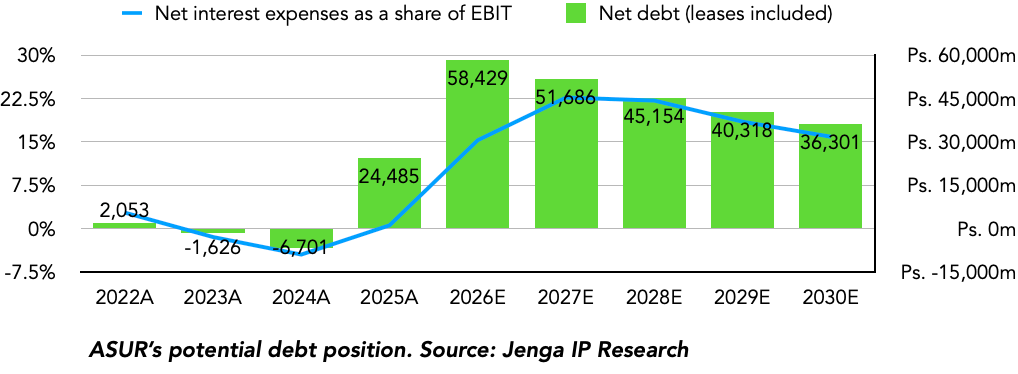
My emphasis on the debt incurred from the deal is due to where ASUR is coming from. Historically, ASUR ran the most conservative airport balance sheet in the world; it maintained net cash positions and paid a big dividend in 2025. However, that same balance sheet will jump from net cash in 2024 to Ps. 58.4 billion (45% of ASUR’s market cap) at the end of 2026 (see chart above). More critical for ASUR’s operating earnings is the interest the new debt comes at.
Some of the new debt, such as the infrastructure debentures with the Central Bank of Brazil, are priced at inflation +6.96 - 8.05%, incurring much higher interest costs than ASUR’s existing debt.
At face value, the 9.4x EV/EBITDA seems like a good deal, but as I dug deeper into Motiva’s balance sheet and accounts, I concluded Motiva may have had the better side of this deal and could have long-term consequences for ASUR shareholders.
URW U.S. terminals acquisition
In December 2025, ASUR closed the acquisition of URW’s commercial concessions at 9 U.S. airport terminals, 6 in LAX, 2 in JFK and 1 in Chicago’s ORD airport. These concessions are purely non-aeronautical revenue; ASUR earns a royalty from retail spending at these terminals and then pays the airport a tenant rent. These fees are unregulated and tend to grow faster than aeronautical revenue but come with higher costs. Rent fees alone are 85% of the previous year’s revenue, minus some expenses at some terminals.
ASUR paid Ps. 5.63 billion for URW’s U.S. airport terminal assets, and while the overall deal price looks particularly high given the low EBITDA expectations for 2026, potential growth in LAX and the opening of the JFK New Terminal 1 in 2027 could ramp up revenue and EBITDA for the next few years, and I suspect the deal is closer to 10-11x 2028 expected EBITDA. Not cheap, but it comes with less debt when proportionally compared to the Motiva acquisitions. It’s also important to note that its revenue stream is 100% USD, which we view as long-term favourable for ASUR.
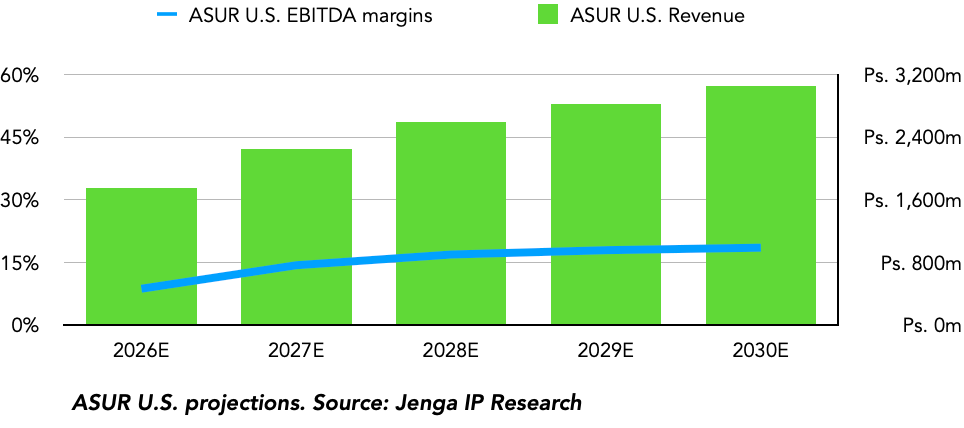
From management’s perspective, I do understand the rationale behind both deals. Colombia’s airport concession will be coming to an end in a few years, with the regulated revenue portion ending in 2028, and Cancún, as we will discuss, may have reached its growth peak, an overall situation that neither OMA nor GAP faces. As a result, there’s a lot of pressure to diversify, reduce exposure to tourist passenger flow and increase their bargaining position for future concessions. These goals need to be balanced with great deals, as they did with Puerto Rico and Colombia airport concession acquisitions.
III. Mexico’s airport passenger flow
Before diving into the valuation models and assumptions behind revenue, costs and passenger growth, it’s always useful to put the current climate into perspective. Prior to 2019, the airports shared a similar growth model:
5% passenger growth
6% pricing growth
An additional 1- 2% from operating leverage
These led to a 13% EPS CAGR, but in recent years, revenue per passenger grew slightly faster to 7-9% due to the MXN depreciation, as international passengers became a larger share of revenue and tariff pricing renewals, while passenger growth declined from 5% to 3-5% as the discount airlines, Volaris and Viva, gained more scale, leading to slower incremental growth share.
The table below highlights this dynamic across passenger volume, revenue per passenger and total Mexican revenue. I also included the passenger growth for 2026 (Jan - Aug), which helps put the points discussed earlier into perspective.
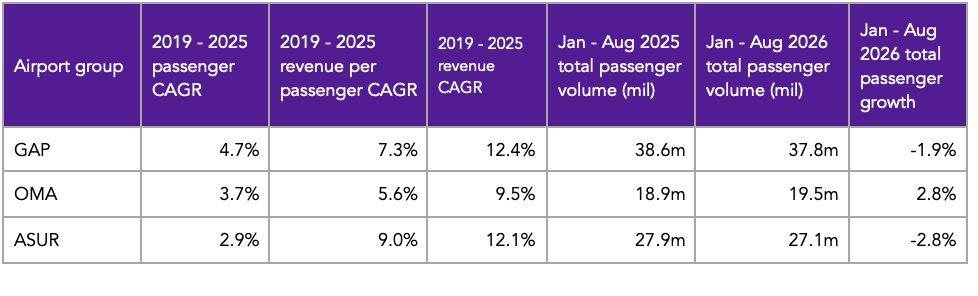
As you see from the table, ASUR grew its passenger volume the slowest (Cancún weakness in 2025), but its overall revenue grew the fastest between 2019 and 2025 (USD appreciation impact). For 2026, the trend continued, again driven by weakness in Cancún.
Year to date, OMA has so far been the best performing from a passenger growth lens, particularly driven by Monterrey (46% of OMA’s revenue) and its smaller airports like Chihuahua, Durango and Tampico.
I expect the weakness across the three airport groups to continue for the rest of 2026 and possibly the first half of 2027, with the rebound mainly driven by when the Middle East tensions are resolved and normalisation of the Pratt & Whitney engine situation for Volaris, followed by Viva.
The next table highlights the current passenger growth for the main airports within each airport group:
GAP (Guadalajara, Los Cabos, Tijuana and Puerto Vallarta)
OMA (Monterrey, Culiacán, Ciudad Juárez, Mazatlán and Chihuahua)
ASUR (Cancún, Mérida and Villahermosa)
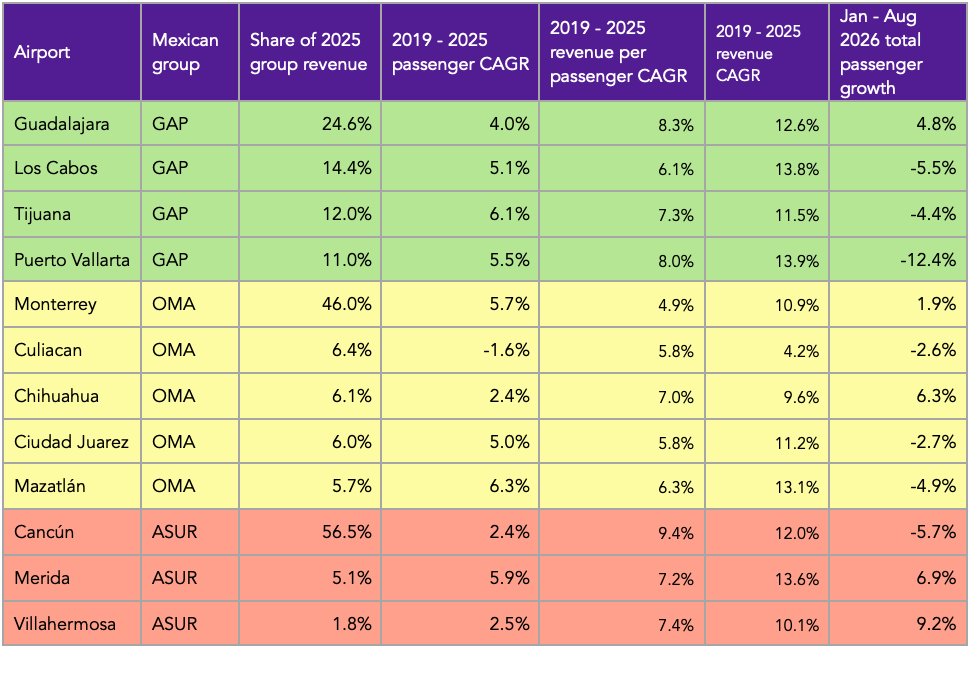
As shown in the table, GAP is much more diversified than the other two groups, with half of its revenue coming from 3 airports, rather than just one airport as with ASUR (Cancún) and OMA (Monterrey). GAP’s big three airports are also diversified by purpose (business, family and tourism travel) and is the core reason why GAP deserves a higher earnings multiple than its peers.
An important point for our earnings growth model, though, is the current state of passenger growth across the airports, and as highlighted in the final column, there are two interesting trends worth discussing.
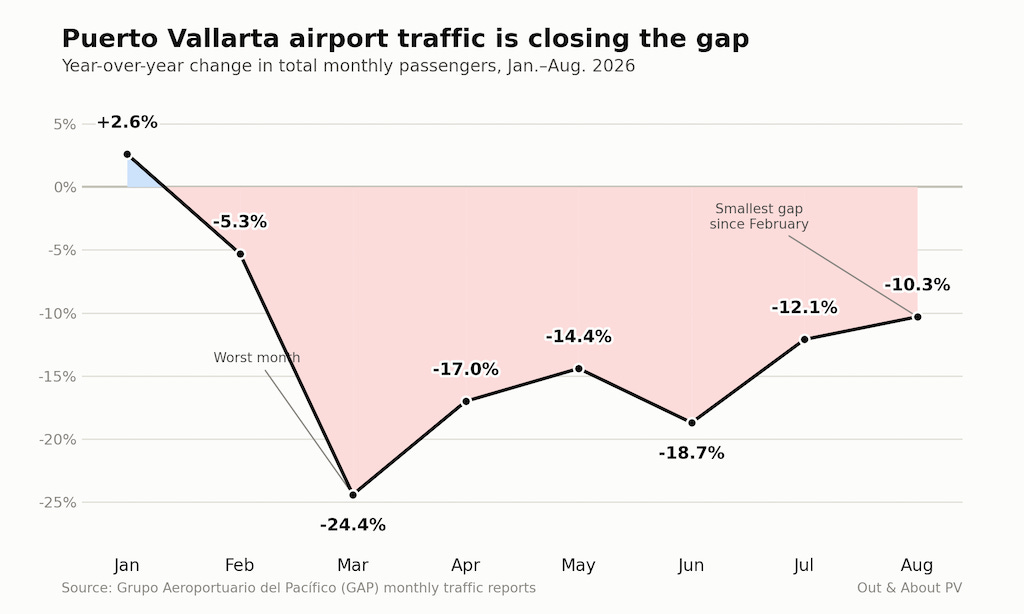
Tourism weakness (Cancún, Los Cabos and Puerto Vallarta): Generally, I find tourism to be the highest growth-potential purpose but also the most exposed to consumer trends and the economy. During boom times, as we saw in 2022 and 2023, these perform well, but suffer during consumer weakness and also face a bigger substitution risk. GAP’s Puerto Vallarta, a popular destination for American retirees, was particularly hit by security concerns from cartel activity earlier in the year and Spirit Airlines’ bankruptcy and resulting capacity loss.
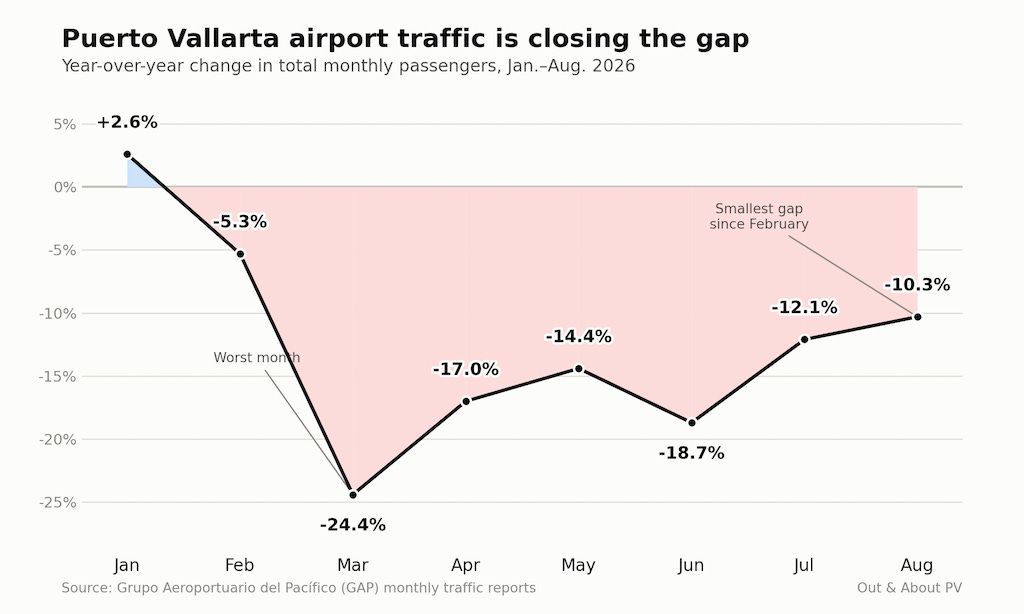
I don’t expect an immediate recovery here, given these are mid-term issues and will take some time to recover. Cancún, on the other hand, suffers from a more long-term issue. For years, Cancún served as the undisputed number 1 tourist destination for Americans outside the U.S., and while it’s still leading the market, I think analysts could be underestimating the threat other tourism destinations pose, particularly given the MXN strength. Take Punta Cana in the Dominican Republic (DR), an alternative destination for American tourists. Between 2018 and 2025, Punta Cana’s passenger flow as a share of Cancún’s grew from 31% to 37%, and for the first 6 months of 2026, its share is at an all-time high of 43% (see graph below).
Beyond Punta Cana, other destinations like Aruba, Bahamas, and Curaçao each reported growth for H1 2026, albeit with some weakness for American tourists. Without MXN depreciation, Cancún will remain at a price disadvantage, and further supporting this view is our most recent study of price differentials between Cancún and other alternatives.
Cancún pricing study
Given that the majority of Cancún’s American tourists come from Miami, Dallas and Houston, with the support of AI, I web-scraped current pricing for an all-expense, 7-night trip between the three destinations to Cancún and compared it to 21 alternatives across Mexico, the Caribbean, Turkey, London and Miami (without flights) on peak dates in June and December 2027.
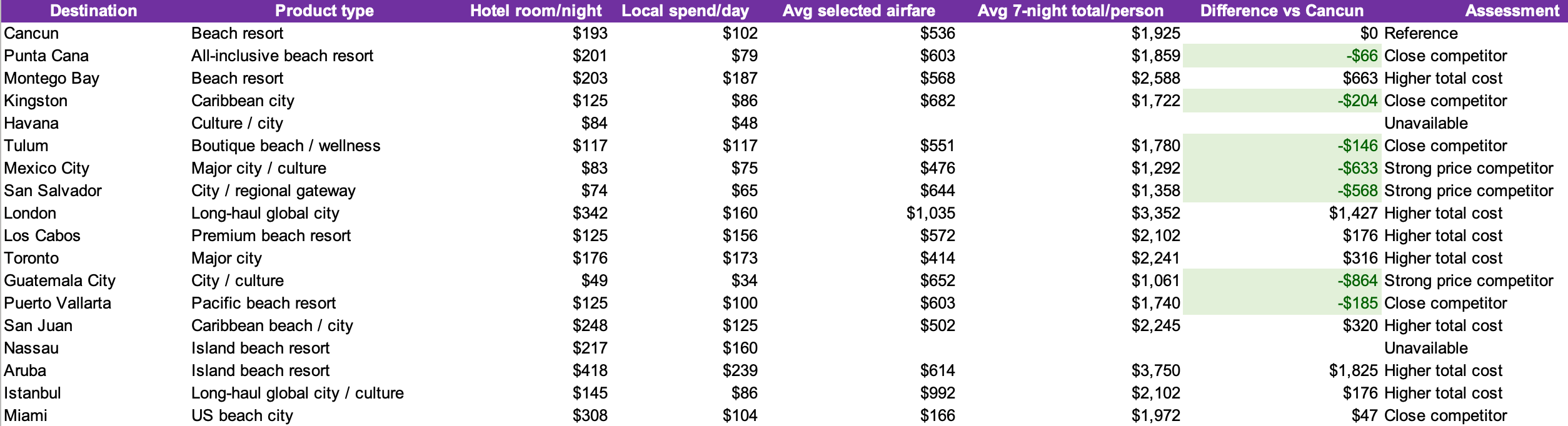
As you can see from the table above, Cancún, as well as other Mexican alternatives, has increased in total pricing (hotel, flight and day spend) and once seen as one of the lowest-cost beach travel destinations, is now priced (USD 1,925) above alternatives like Punta Cana (USD 1,859, USD 66 difference). A holiday package in Miami, without a flight ticket, is increasingly becoming nearly as cost-effective for Americans when compared to a Cancún holiday. Without MXN depreciation, Cancún’s appeal is unlikely to bounce back to what it was, and I factor this into the ASUR valuation model.
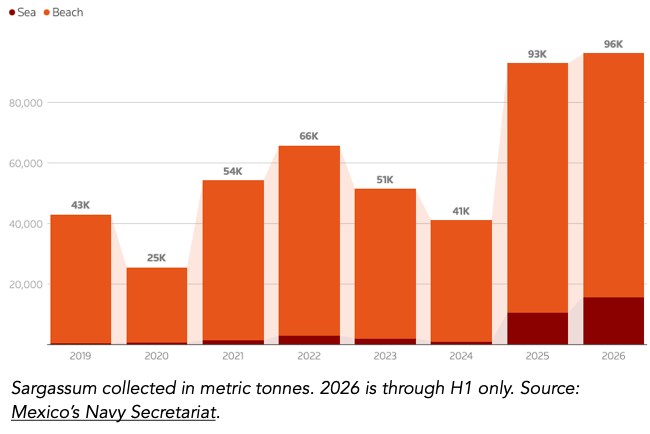
A final blow and more unpredictable factor for Cancún has been the presence of Sargassum seaweed, a smelly microalgae across the Riviera Maya beaches. 2026 is set to be the worst year on record and, according to government data, the region picked up more Sargassum in the first half of 2026 than the whole of 2025 (see chart below), and its growth on Cancún beaches leads to hotel closures, lower occupancy rates and less tourism demand. We have no sense of how this factor changes for the future, and for valuation and margin of safety, I assume this stays in a mild-to-bad state.

Business travel strength (Monterrey, Guadalajara and Villahermosa): Business travel has been particularly strong outside Mexico City, with Monterrey being the biggest beneficiary as corporates set up manufacturing hubs there to take advantage of its proximity to the U.S. FDI increased 22.4% for the first half of 2026 in Monterrey and, for the first time, represented more than 10% of Mexico’s total FDI, and I continue to see strong evidence of manufacturing activity supporting business travel. That said, it’s always important to note not to become overindexed to one trend, no matter how strong it looks, and this is why I still view Guadalajara as the higher-quality earnings given the diversification across business, tourism and passengers visiting friends and family. As a result, this also keeps Guadalajara more exposed to international passengers (6 million versus 2.5 million PAX).
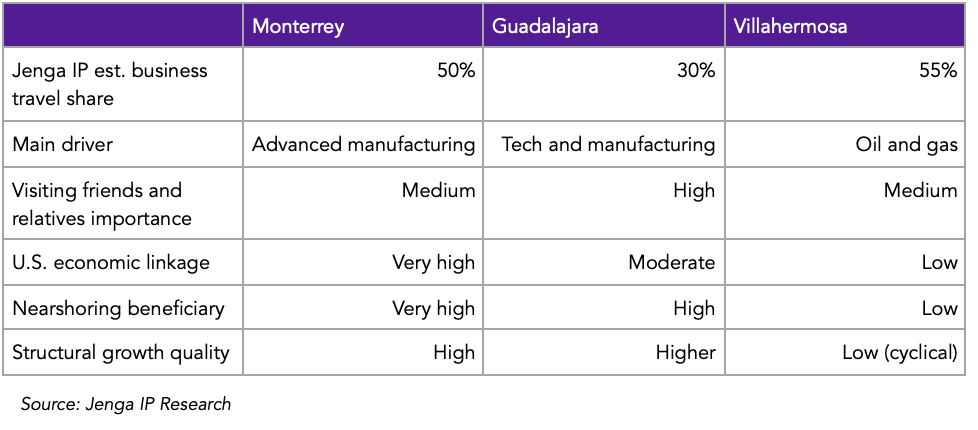
Villahermosa (and Veracruz, ASUR), on the other hand, is a more unique business travel boom, highly correlated with oil and gas activity in Mexico and often experiences travel boom and bust cycles. Lately, there’s been policy by the Tabasco government to support domestic flights for the petroleum sector, and I believe the 9.2% growth experienced in 2026 YTD is directly attributable to this. Given the cyclical nature of oil and gas activity, I wouldn’t expect recent growth trends to simply grow forever, and I factor these cycle turns into our ASUR valuation model.
This leads us to the valuation model and potential IRR for GAP, OMA and ASUR.
3. GAP’s valuation model
You can view the GAP valuation model here.
Rather than discussing each line in the valuation model, I will provide an overview for each company, discussing key passenger growth & non-aeronautical revenue, costs, and earnings considerations for each Mexican airport group. Also note that explanations for key growth lines are directly included in each valuation model spreadsheet.
GAP passenger growth and non-aeronautical revenue
Passenger growth: Factors such as Guadalajara’s ongoing business travel boom, recovery in Los Cabos and Puerto Vallarta (assuming improved security concerns), mild growth in Tijuana and recovery in Jamaica’s affected tourism flow from Hurricane Melissa, GAP’s total passengers could grow by 3.95% between 2025 (63.7 million) and 2030 (74.9 million), with Guadalajara contributing to 49.3% of the total 11.2 million passenger growth.

Revenue per passenger: I expect a reduced pricing pace for GAP’s revenue per passenger to 4.7% annually, led by strong pricing potential in Guadalajara and the tourist airports (Los Cabos and Puerto Vallarta) and Tijuana.
Non-aeronautical revenue: Excluding the CBX acquisition, non-aeronautical revenue could grow by 8.2%, supported by strong potential across cargo warehouses, food and beverage and car rental categories. I estimate that the CBX acquisition adds an additional MXN 3 billion in annual revenue (17.5% of non-aero revenue) by 2030.
Total revenue growth: Altogether, this should lead to total revenue growth for GAP of 9.7% between 2025 (MXN 32.5 billion) and 2030 (MXN 51.7 billion).

GAP costs and earnings
I expect costs per workload to increase by 5.3%, versus revenue per workload growth of 6.2%, leading to some operating earnings margin expansion (54% to 56% EBIT margins) driven mainly positively by the removal of the technical assistance fee, which historically averaged 7% of GAP’s total costs and the high-margin CBX acquisition.
Wage inflation could be higher given the 15% increase in minimum wages in Jamaica, security staff for the bonded warehouse and cargo businesses and others.

Interest expenses: I expect material acceleration in GAP’s debt level, peaking at 2.5x net debt/EBITDA in 2027 with a potential 8.3% average financing cost. Overall, this slightly compresses net income margins from 29.4% in 2025 to 29.3% in 2030 and an overall 9.67% net profit CAGR.

GAP’s Valuation
I believe 19x P/E is the appropriate multiple for GAP (see image above), driven by its diversified airport and traveller profile, currency balance between MXN and USD streams, and attractive margin and capital return profile.

Combined with MXN 42 billion in dividend payments, GAP IRR could amount to 11.7% between now and the end of 2030 (4.33 years).